Last updated November 21, 2026
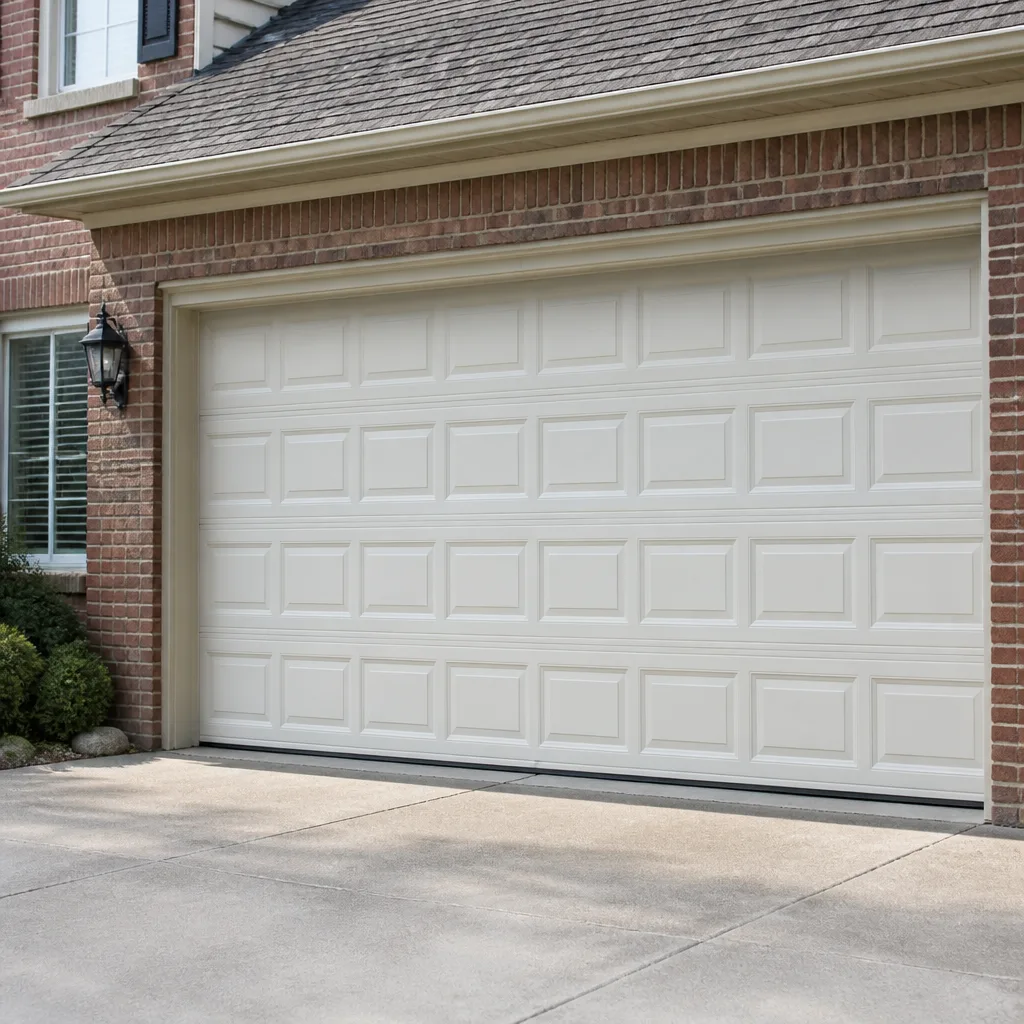 Raised-panel steel
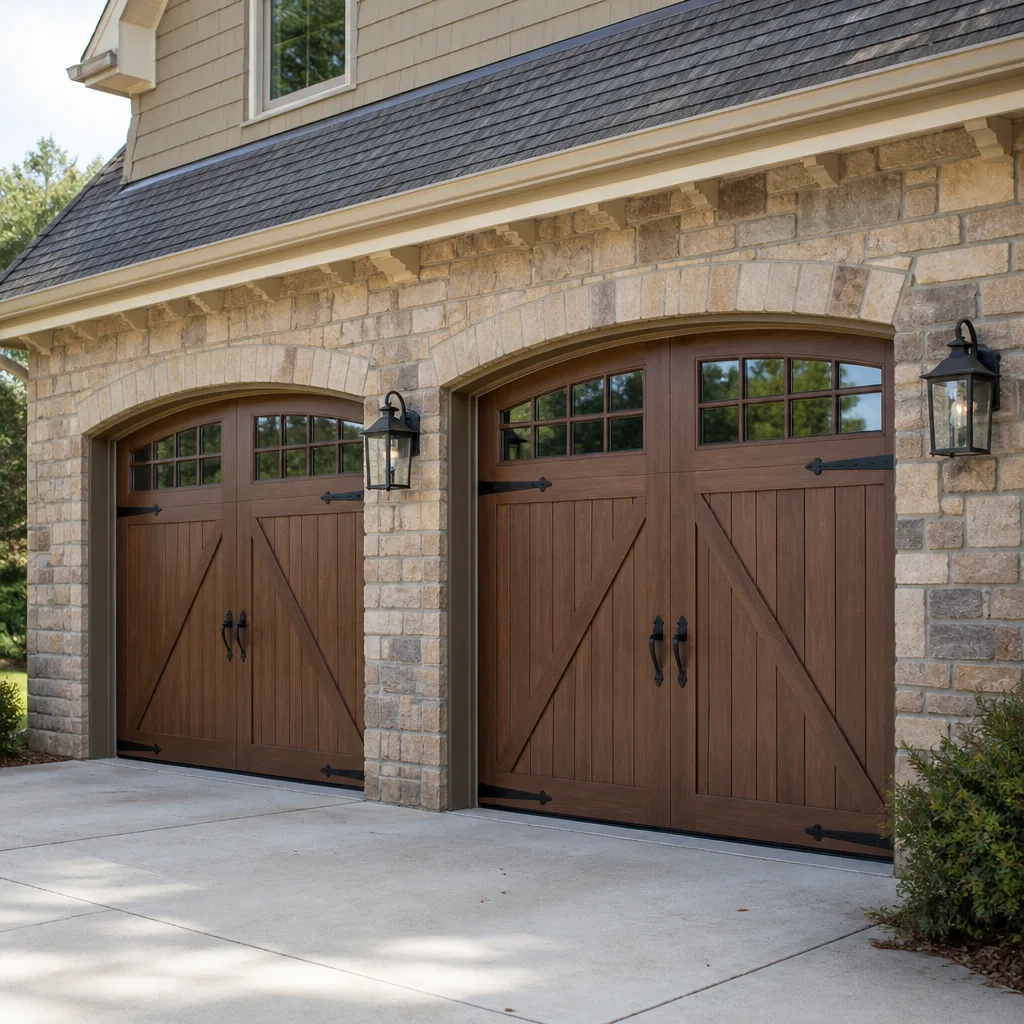 Carriage house
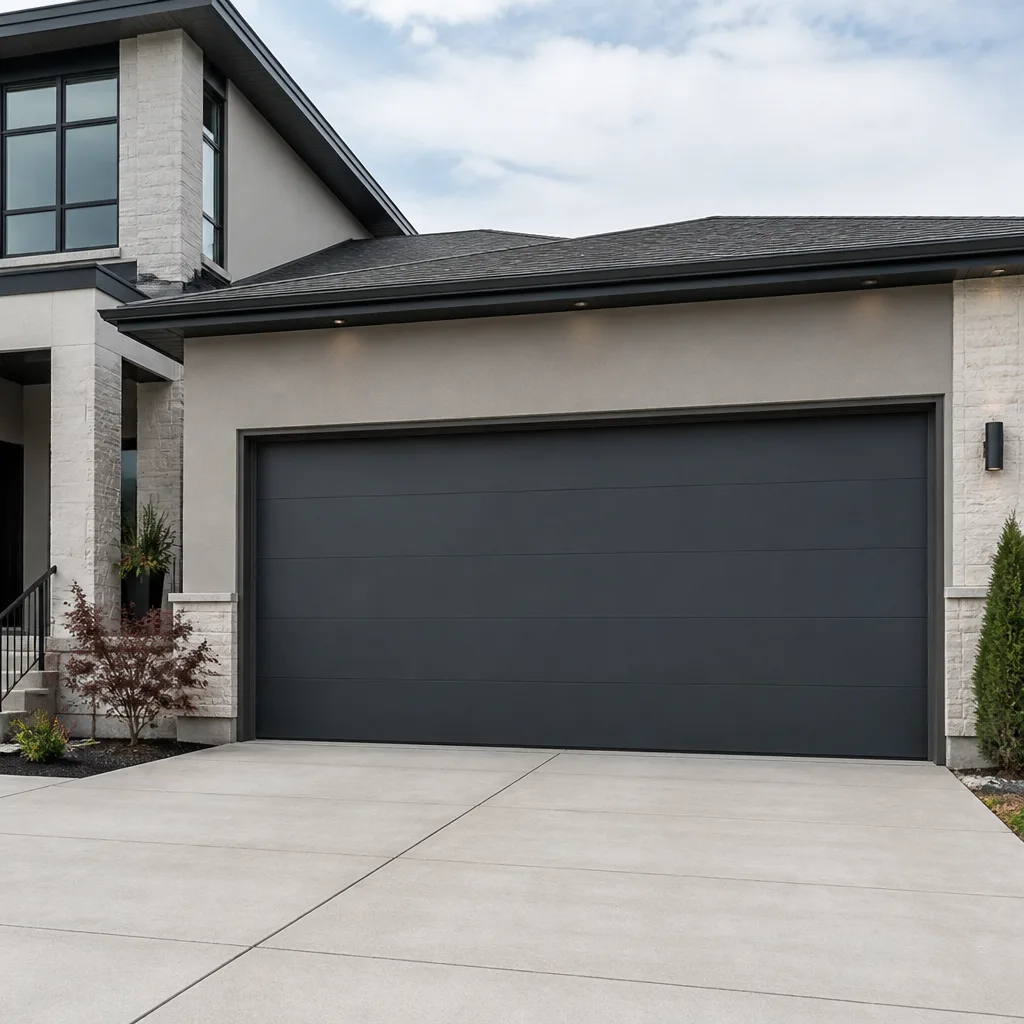 Modern flush
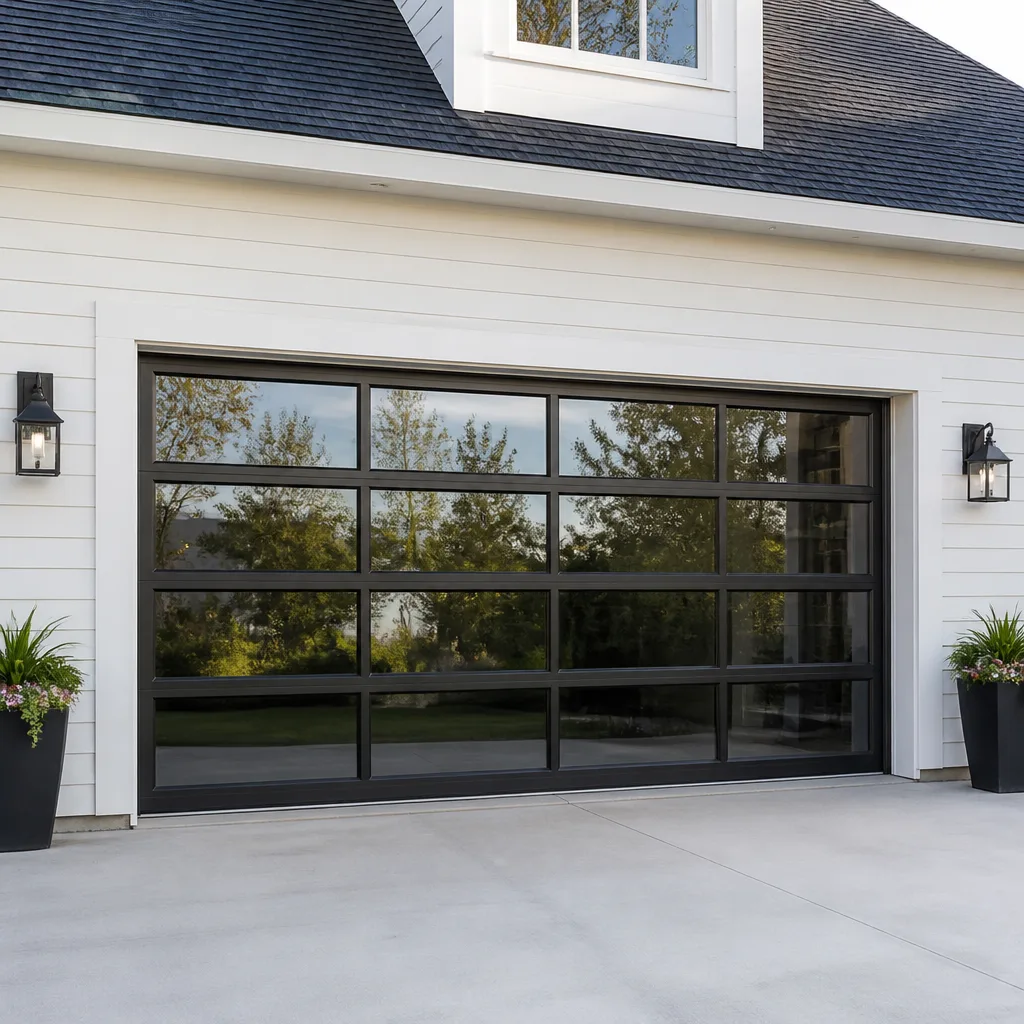 Full-view glass
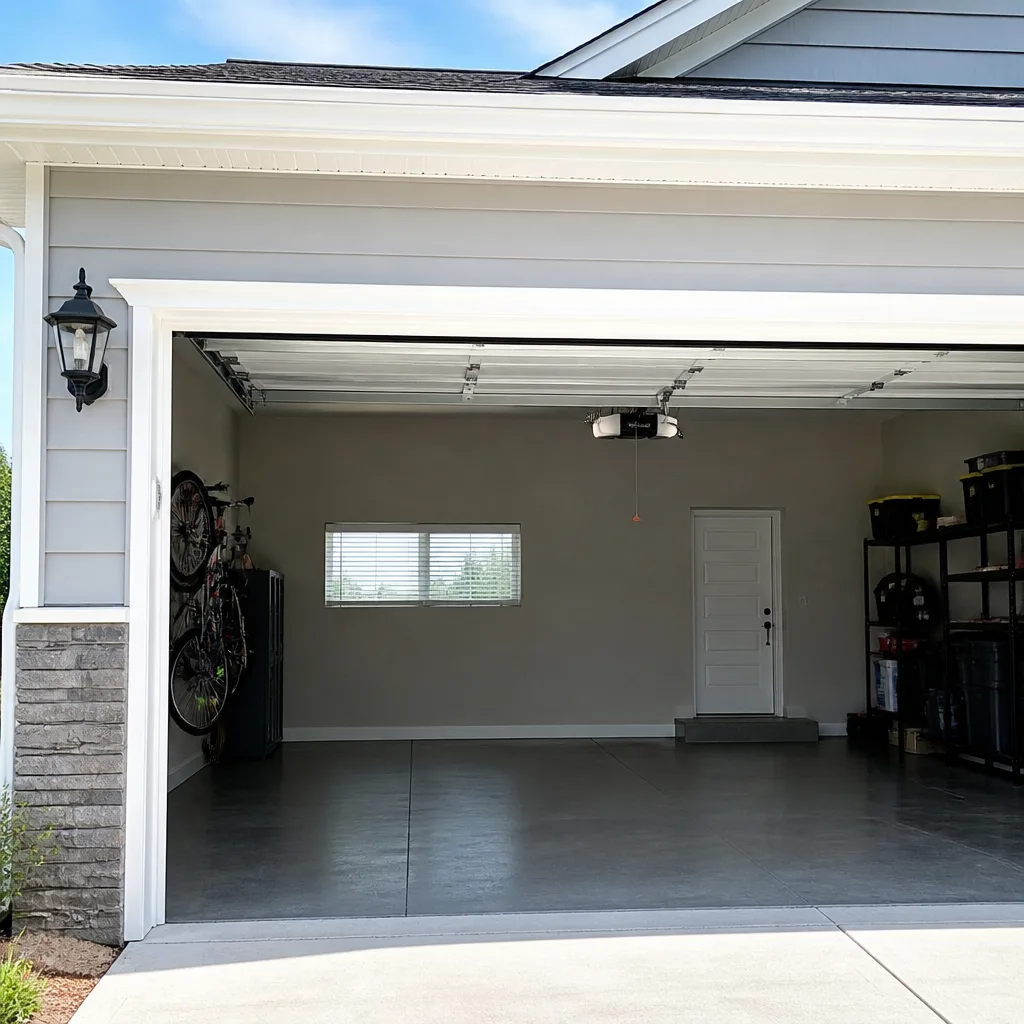 LiftMaster openers
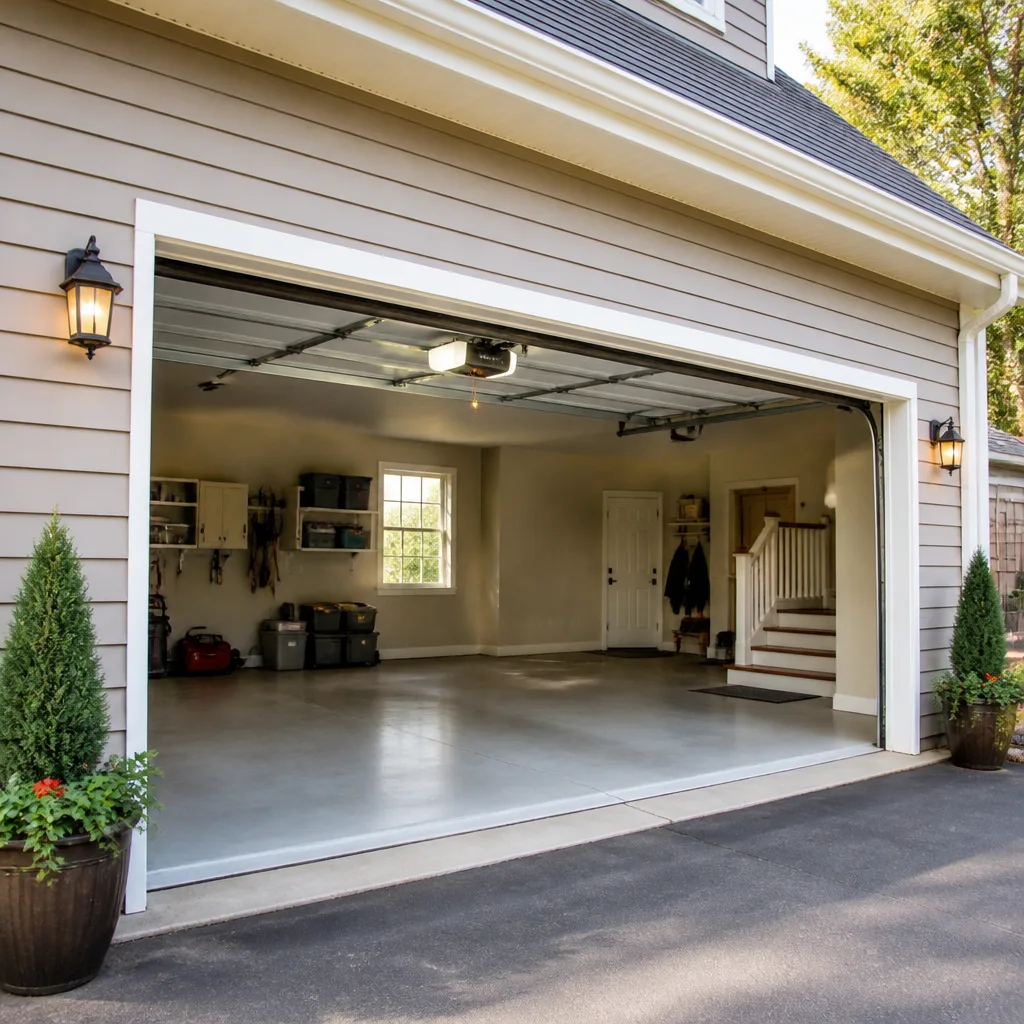 Chamberlain openers
Full 25-point door and opener safety check with every visit - springs, cables, rollers, tracks, and your LiftMaster or Chamberlain opener included
You get a price before we start. It does not change when the pro arrives.
Get your free estimateThe Complete Guide to Garage Doors in East Flatbush
Most garage door guides are written for suburban driveways with 20 feet of approach space. In East Flatbush, you may have six. That single fact changes what door you can install, where the opener mounts, and whether certain hardware even fits inside the garage. Older attached garages here also carry a mix of original and replacement hardware, so a diagnosis that stops at “the spring is broken” often misses a second and third problem layered underneath. This guide walks through the decisions a homeowner in East Flatbush actually faces: sizing limits on dense blocks, low-headroom hardware, materials that survive Brooklyn’s humidity and winter road salt, and openers that keep an urban garage secure. We’ll cover what we’ve learned as garage door specialists.
Quick Answer
The right garage door setup in East Flatbush depends less on style than on physical constraints: tight approach space, low ceilings in many attached garages, and older hardware needing brand-matched parts. Start by measuring headroom and width, pick a material suited to humidity and road-salt winters, match your opener to the brands already installed, and leave spring work to a trained specialist. A free measure and written estimate will tell you exactly what fits.
Styles & brands we work with
- Raised-panel steel
- Carriage house
- Modern flush
- Full-view glass
- LiftMaster openers
- Chamberlain openers
Table of Contents
- Why Dense Block Layouts Change What You Can Install
- Low-Headroom Hardware and Opener Placement
- Which Door Materials Hold Up to Brooklyn Weather
- Single-Trade Specialists vs. General Contractors
- Brand Compatibility for Openers Already in East Flatbush Homes
- Security Considerations for Urban Garage Doors
- Spring Repair: The High-Risk Service Worth Doing Right
- What Garage Door Work Costs in East Flatbush
Why Dense Block Layouts Change What You Can Install
In East Flatbush, many homes sit on narrow lots with short driveways that open straight onto the sidewalk and street. That geometry isn’t a detail; it’s a limit. A car pulling into a six-foot approach can’t swing the way a suburban driveway allows, so the door has to lift cleanly and quickly, and the opener has to be reliable enough that you’re not reversing and re-pulling on a busy block.
What this means in practice for a driveway-constrained home:
- Door width matters more than style. A single-car door sized to your exact opening leaves less margin for error when approach is tight. Oversizing a door to fill a wide opening can eat the clearance your car needs.
- Track length and travel are constrained. A door has to travel fully up its tracks. In a short garage with a low ceiling, longer tracks may not fit without custom hardware.
- Obstruction settings are safety-critical. On a block where kids and pets move on the sidewalk near the apron, the opener’s safety reverse must be dialed in correctly, not guessed.
- Street parking pressure means the door gets used constantly. When the driveway is small, people park on the street and use the garage door as the primary entry – which accelerates wear on springs, openers, and rollers.
The mistake is treating a compact urban opening like a standard suburban one. Measuring the actual approach, opening height, and interior ceiling before any door or opener choice is the only way to guarantee the system works. A free measure answers this before you commit.
Low-Headroom Hardware and Opener Placement
Many attached garages in East Flatbush sit under the main living area, and that structural fact tends to cap how tall the garage ceiling is. Low headroom – the space between the top of the door’s travel and the ceiling – changes both the hardware and where the opener mounts. It’s the constraint most homeowners never think about until a door won’t fit.
- Measure the headroom first. That’s the distance from the top of the open door to the ceiling. If it’s tight, standard torsion hardware may not clear.
- Choose low-headroom hardware if needed. Low-clearance track systems exist specifically to work under low ceilings. They’re a different product, not a modified standard one.
- Mount the opener correctly. Ceiling-mounted openers need solid framing above them. In older garages, that framing may need attention before install.
- Confirm the door’s full travel path. No pipes, beams, or ducts should sit in the way of a door going up. In older East Flatbush homes, this is where surprises show up.
- Test the safety reverse and manual release. Both have to work smoothly in a used space, not just a clean new one.
If a neighbor’s driveway has a door that opens cleanly and yours doesn’t, the difference is usually headroom and track, not the door brand. Have the space measured before you fall in love with a specific model. If the opener itself is the problem, our garage door opener repair service covers the diagnostics.
Which Door Materials Hold Up to Brooklyn Weather
Brooklyn’s humidity is real, and so is the winter road salt that gets tracked onto driveways and splashed up during plowing. The two together are hard on cheap doors. This is where a lot of guides written for dry climates get it wrong, and why we point East Flatbush homeowners toward materials that handle repeated moisture cycles.
Here’s how the common options compare in this specific climate:
- Steel with a factory finish. The most common choice for a reason. Steel holds up to humidity well, especially when the factory finish is intact. Watch for scratches that expose the metal – touch them up.
- Aluminum. Rust-resistant, so it’s a good fit for years of road-salt exposure. Lighter, so it works better with low-headroom hardware and smaller openers. Dents more easily than steel.
- Insulated steel. Worth considering when the garage shares a wall with the living space. The insulation helps with sound and temperature at the garage-home boundary.
- Wood and wood-composite. Attractive but high-maintenance in humidity. Wood needs sealing and re-coating on a schedule, and the schedule is shorter here than in drier places. Composites are easier than wood, but still need finish maintenance.
The road-salt point deserves its own note. Salt tracked onto the apron sits against the bottom panel and contacts the rollers and hinges. Rinsing the bottom section when you wash the car isn’t a big job, and it pays off. Any exposed steel that starts to rust at the seams needs attention before it goes structural. Whether you need a repair or are considering a new door, our garage door installation team can walk you through the material options for your specific garage.
Single-Trade Specialists vs. General Contractors
When a garage door has more than one problem – a broken spring, a door that’s off-track, and an opener that’s been struggling for months – a general contractor often treats each fix separately, or hands off the parts they don’t regularly work with. A garage door specialist sees the whole system. The parts interact: a door that’s out of balance wears out the opener, and an opener that jerks wears the track and rollers.
A few signs a garage door job needs a specialist rather than a generalist:
- The spring is involved. Most general handymen won’t touch torsion springs because of the tension stored in them. That’s an honest limitation, and it’s why spring work is a specialist service.
- Multiple brand parts are in the system. A door, an opener, and hardware from mixed brands need someone who knows all of them. We work with LiftMaster, Chamberlain, Genie, Clopay, Amarr, Wayne Dalton, Craftsman, and Raynor components every day.
- The diagnosis doesn’t add up. “It just needs a new spring” when the door is also visibly off-level means the diagnosis stopped early. A specialist traces the root cause.
- The job needs to be done in one visit. General contractors rotate between trades. A garage door specialist arrives equipped to handle the door, the opener, and the hardware in the same session.
For older attached garages in East Flatbush, layered problems are the norm, not the exception. Decade-old door hardware stacked under a newer opener and a door someone previously adjusted is a common profile. The right approach is to look at the whole system before quoting, which is what Garage Door Repair East Flatbush is set up to do.
Brand Compatibility for Openers Already in East Flatbush Homes
Most openers in East Flatbush homes fall into a small set of common brands, and knowing which brand is under your ceiling matters when servicing or replacing it. Remote controls, wall pads, safety sensors, and gear assemblies differ by brand, and a “close enough” substitute often fails within weeks. Your brand, our specialty is the honest way to put it.
The openers you’re most likely to find in East Flatbush garages:
- LiftMaster. One of the most common residential openers in this area. Uses its own remote frequency and accessory ecosystem. Replacement remotes and wall controls have to match the model.
- Chamberlain. Shares design heritage with LiftMaster. Most homeowners can read the model number off the opener head and confirm compatibility in a phone call.
- Genie. Another widespread brand. Screw-drive and belt-drive models behave differently from chain-drive, and servicing follows the drive type.
Other brands we routinely service include Craftsman, Wayne Dalton, and Raynor openers, plus doors from Clopay and Amarr. What to check before you call:
- Brand name. Usually printed on the opener’s motor head or under the light cover.
- Model number. A small sticker on the opener housing.
- Drive type. Chain, belt, or screw. This narrows down the parts needed.
- Door brand. If the door is original to the home, the brand may be stamped on the bottom bracket or hinges.
A supplier who stocks one brand and calls it universal isn’t doing you favors. When the diagnosis requires new parts, matching the brand to what’s actually installed is what saves the job from being redone twice.
Security Considerations for Urban Garage Doors
An urban garage in East Flatbush isn’t a storage shed at the end of a long drive. It’s a street-facing access point to the home, and that changes what matters in an opener. Two features sit at the top of the list: rolling code technology and a properly secured manual release.
Rolling code technology. Older openers used a fixed code for the remote; a captured signal could be replayed. Rolling code changes the code with every use, so a captured signal is useless. If your opener is old enough that you don’t know whether it rolls codes, ask before assuming it does.
Manual release vulnerability. The manual release – the handle you pull to disconnect the door from the opener – usually hangs on a cord near the top of the door. On a street-facing garage with accessible exterior, that cord can be reachable through a small gap or a service door. Standard practice is to shorten the cord so it can’t be reached from outside. That’s a small, cheap adjustment with real security value.
Other security practices for urban garages:
- Keep the garage-to-home door locked and solid. The garage door itself is one layer; the door between garage and living space is the real boundary.
- Don’t label remotes with the address. A lost remote with an address label is worse than a lost remote.
- Test the safety reverse and the open/close light sequence. A door that doesn’t reverse properly is a security risk to the household, not just a nuisance.
- Watch for a door that doesn’t close fully. A door that stops short is often a misaligned sensor, but it also leaves a gap wide enough to invite trouble. Fix it promptly.
If a door isn’t locking down, isn’t reversing, or won’t close, that’s a security problem first and a repair second. Emergency service exists for exactly this – a call gets you the door back in service, or the problem diagnosed so you’re not leaving it open overnight.
Spring Repair: The High-Risk Service Worth Doing Right
Garage door springs sit under enormous stored tension. A torsion spring controls the entire weight of the door, and when it fails, it fails with force. That’s why spring repair is genuinely dangerous, and why most general handymen decline the job. If your spring is broken or the door feels unusually heavy, don’t test it by lifting – call for service.
What to watch for:
- A loud bang from the garage. Often the only warning before a torsion spring breaks.
- A door that lifts but won’t stay up. The spring is the counterbalance. If it gives out, the door becomes too heavy for the opener to lift safely.
- A visible gap in the spring coil. The break is often visible on a torsion spring.
- Sagging or shaking during travel. A sign of an unbalanced door, which usually points to springs, cables, or both.
One pricing detail catches homeowners off guard: spring price is per spring. Most doors have a matched pair, and the pair should be replaced together – a mismatched pair wears unevenly. The quote you get should make it clear whether it’s for one spring or a pair. If it doesn’t, ask. Our garage door repair work includes spring repair done in-house by technicians whose sole focus is garage doors.
Never reach for a spring with the door up and the opener live. The stored energy in a torsion spring can cause serious injury even to experienced technicians. Leave it to a specialist.
What Garage Door Work Costs in East Flatbush
What you’ll pay comes down to the specific job, the parts, and the labor, and a written estimate is the only number that’s binding. Typical estimated ranges for common work:
| Job | Typical Estimated Range |
|---|---|
| Single torsion spring replacement | Usually $180-$340 per spring |
| Matched pair of springs | About twice the single-spring range, since both are replaced together |
| Opener repair (motor, gear, remote, sensors) | Depends on part and brand; a written estimate is given after diagnosis |
| Door off-track, roller or hinge repair | Depends on extent and hardware; quoted before work starts |
| Full new door installation | Measured and quoted in advance; installation is scheduled, not same-day |
The price you agree to before work starts is the price. That bears repeating: the written estimate is the price. If something changes during the job – an unexpected finding under a panel, a part that turns out to be a different model – the change is discussed before the work continues. We don’t want anyone surprised by the invoice at the end.
For door installation or replacement, expect a free measure and a written price instead of a same-day promise. That’s the right order, because door sizing, headroom, and opener placement all affect the final number. If you want the free measure and estimate, call (855) 658-4194.
Common Mistakes to Avoid
- Buying a door without measuring headroom. On East Flatbush’s older, lower garages, a standard door may not fit a low ceiling. The measure comes before the purchase, always.
- Replacing one spring in a pair. A mismatched pair wears unevenly and can fail again quickly. Replace both together when the first one goes.
- Watching a generalist try to “adjust” a torsion spring. If the person doing the repair doesn’t regularly work on torsion springs, stop them. The risk isn’t worth it.
- Ignoring the opener model. Buying a remote or wall pad before checking the opener’s brand and model usually leads to a return trip. Read the model number first.
- Skipping the manual release cord security adjustment. On a street-facing garage in East Flatbush, a reachable release cord is a real vulnerability. Shorten it.
- Assuming a door that closes is a door that’s safe. The safety reverse needs testing on a schedule. A door that doesn’t reverse is a safety problem, especially on a block with kids and pets near the apron.
- Using a general contractor for a layered problem. A door with multiple issues needs the whole system looked at, not just the obvious symptom. If the first fix doesn’t last, the diagnosis was incomplete.
See the difference
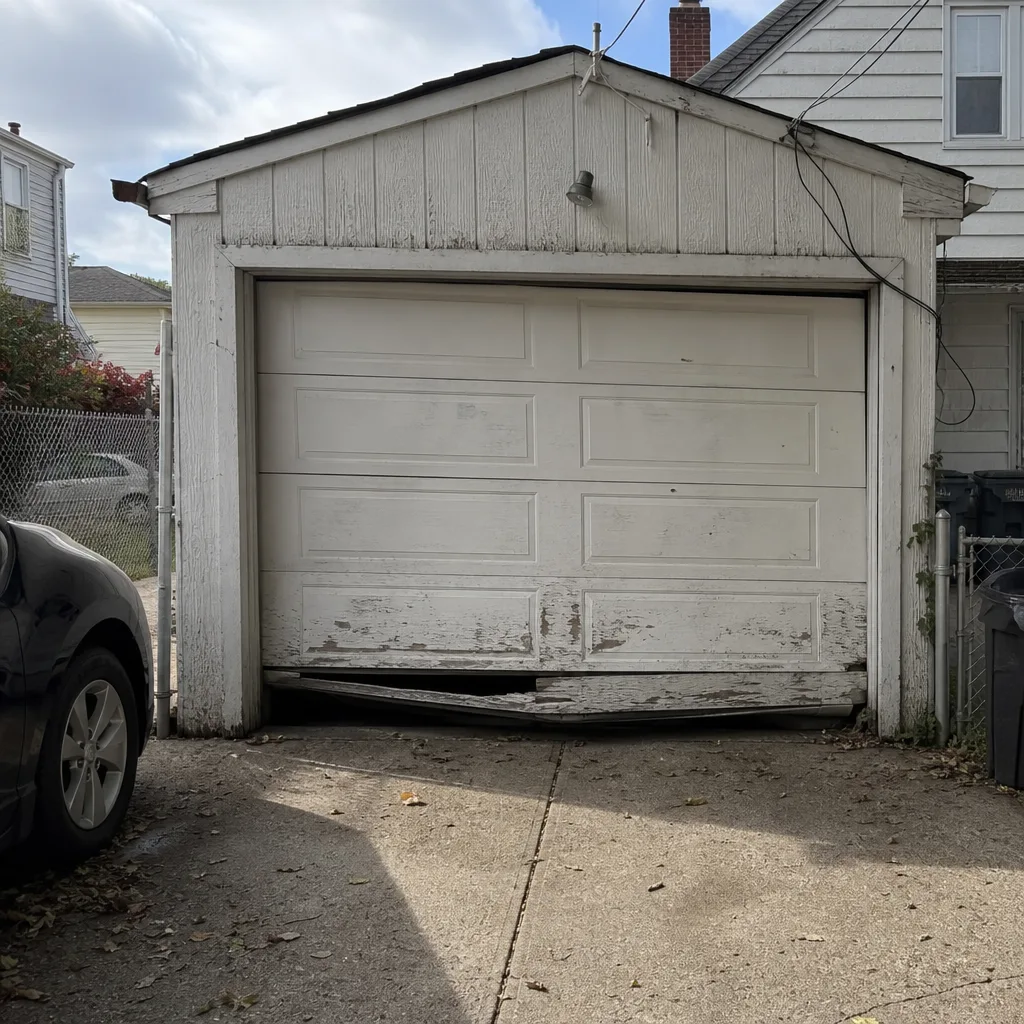 Before
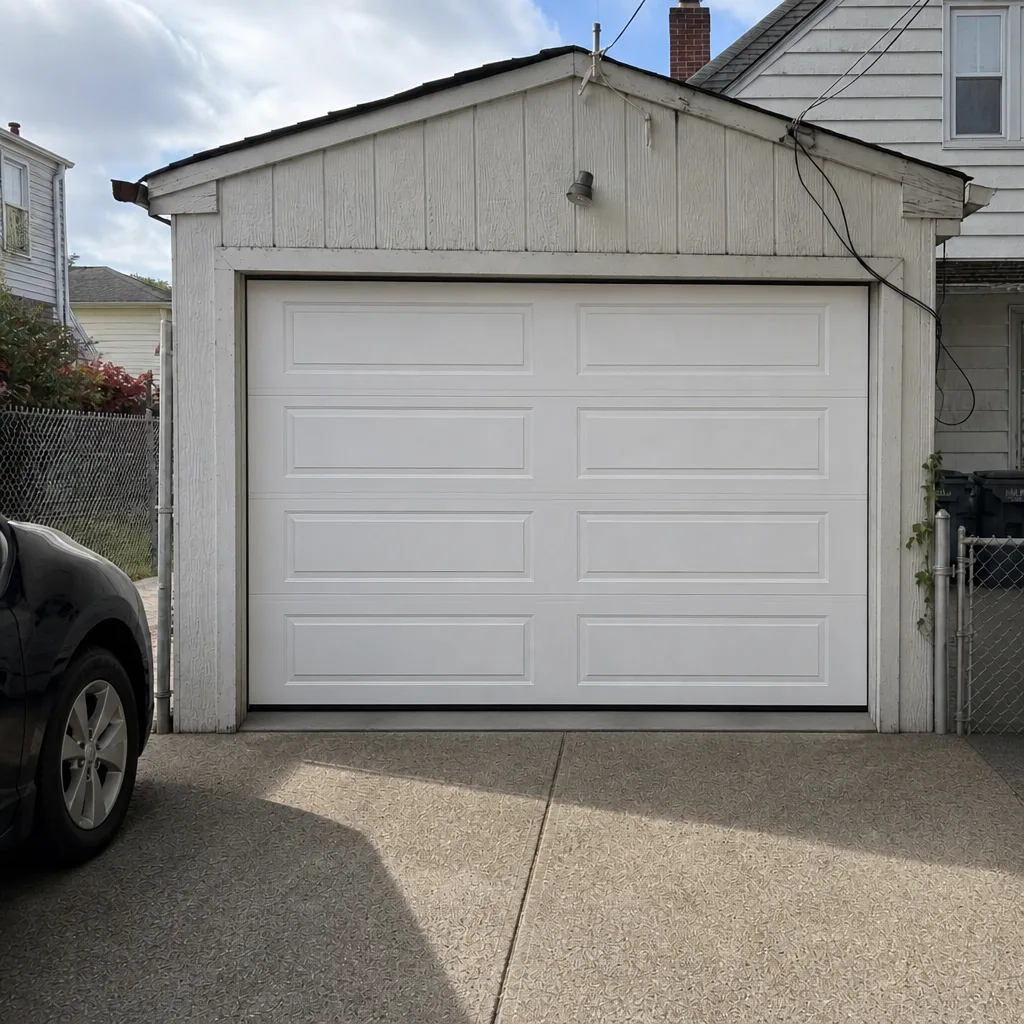 After
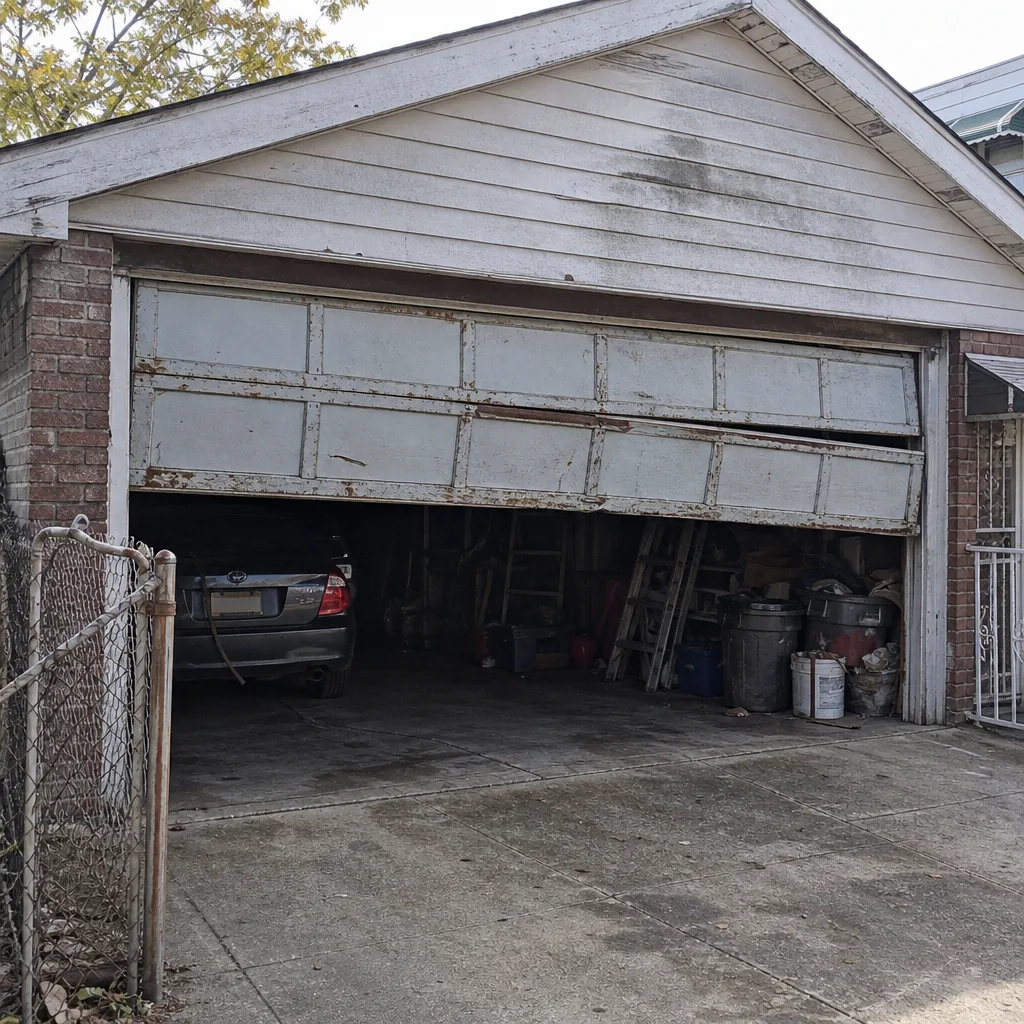 Before
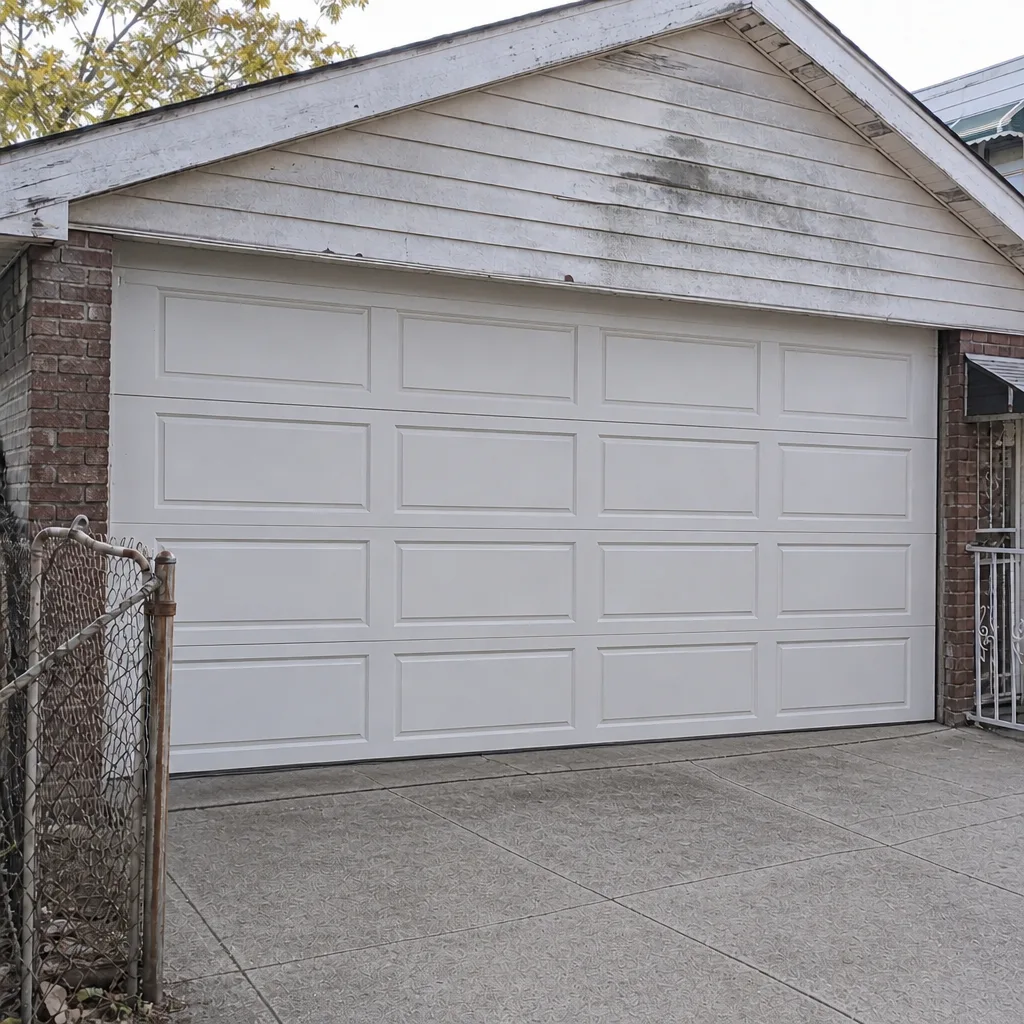 After
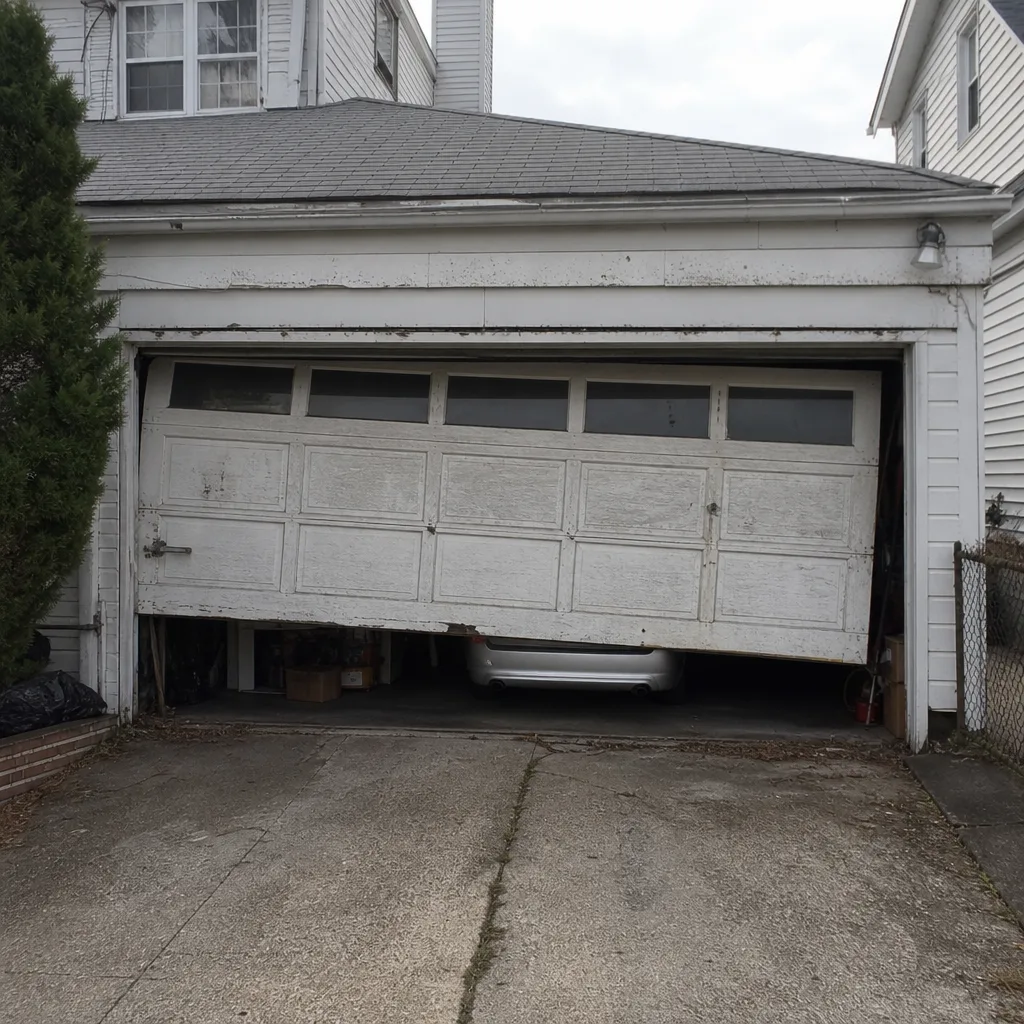 Before
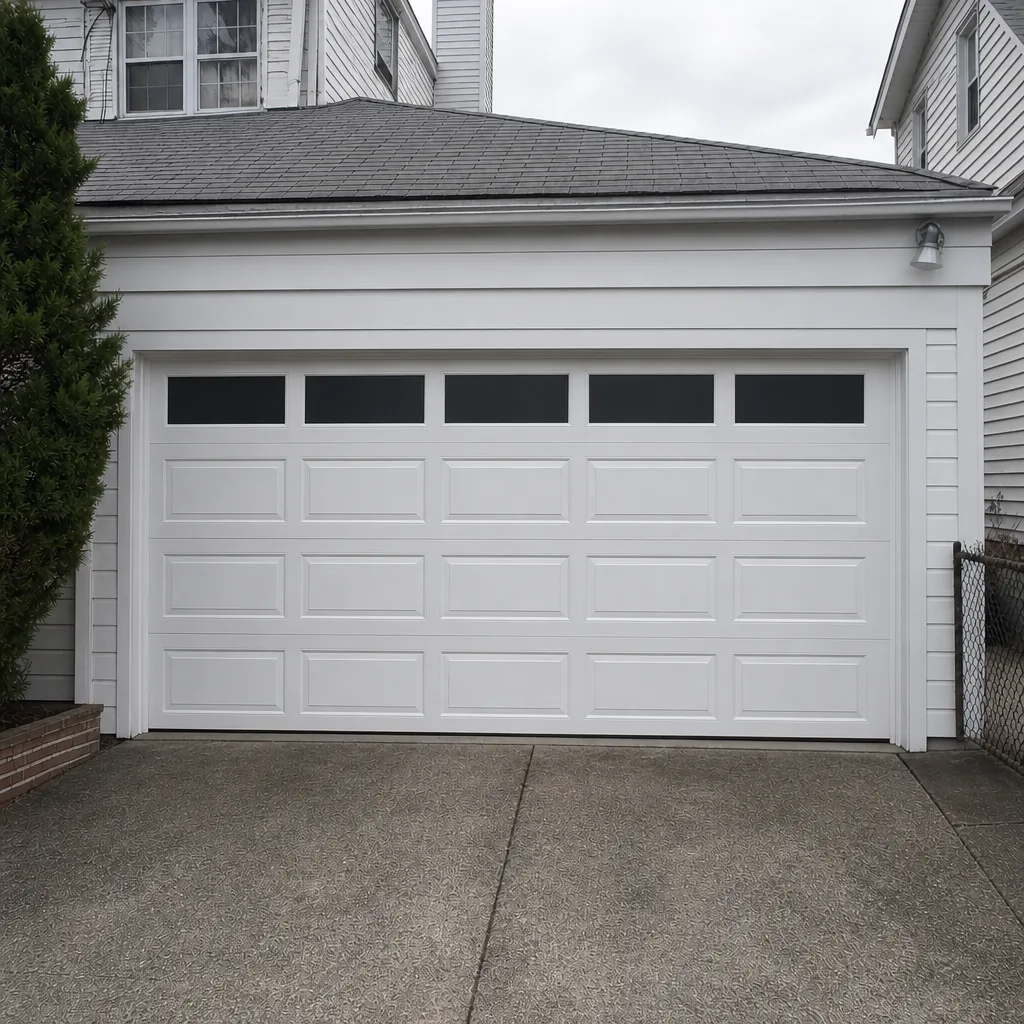 After
When to Call a Professional
Call a professional when the door won’t lift, won’t stay up, or won’t close fully – those point to springs, cables, or opener problems that aren’t safe to troubleshoot on your own. Call if the door has come off its track, if the opener clicks but doesn’t run, or if the safety reverse doesn’t work. Call if you’re hearing a grinding, popping, or banging sound during operation, or if the door has been getting progressively heavier. Call when a spring has visibly failed and the door is stuck. And call before any new door or opener purchase if you’re unsure what will fit your space. Garage Door Repair East Flatbush offers free estimates in East Flatbush – call (855) 658-4194. Our technicians have up to 14 years of experience, and every job is handled by a garage door specialist, not a generalist.
Frequently Asked Questions
Single-spring replacement in East Flatbush typically falls in the $180-$340 range, and a matched pair usually costs about twice that since both are replaced together. The written estimate you get before work starts is the price. Call (855) 658-4194 for an exact quote – estimates are free.
Yes – emergency garage door service is available for urgent access or safety situations, and we can often resolve a straightforward failure in a single visit. Call (855) 658-4194 to describe the problem and get scheduled. Same-day service applies to repair and emergency calls; installation is measured, ordered, and scheduled.
No – the written estimate replaces the initial quote before any work starts, and that’s the final price unless we find something that genuinely changes the job. If that happens, we discuss it with you before continuing. You’ll never be surprised by an invoice above the quote. Call (855) 658-4194 for a free estimate.
The local professionals who perform the work are licensed and insured as required by New York state, and every job is handled by a garage door specialist, not a generalist. Our technicians have up to 14 years of experience. Call (855) 658-4194 for a free estimate.
Almost always – the answer just depends on measuring the actual opening, headroom, and approach before choosing the door. That’s why installation starts with a free measure and written price. If low headroom is a factor, low-clearance hardware can usually solve it. Call (855) 658-4194 to schedule the measure.
We service openers and doors from LiftMaster, Chamberlain, Genie, Clopay, Amarr, Wayne Dalton, Craftsman, and Raynor – including parts from the brand that’s actually installed. Matching the brand to your opener saves the job from needing a second visit. Call (855) 658-4194 for a free estimate.
The Bottom Line
East Flatbush’s dense blocks and older attached garages put constraints on a garage door system that generic guides don’t cover. Measure the approach and headroom first, pick a material that handles Brooklyn humidity and winter road salt, match your opener to the brand already under the ceiling, and secure the manual release on street-facing garages. Layered problems want a specialist, not a generalist. Spring work and door installation belong in trained hands, and a written estimate establishes the price before the tools come out. Let’s get your door back in service today – call (855) 658-4194 for a free estimate in East Flatbush.
Written by the team at Garage Door Repair East Flatbush.