Last updated November 21, 2026
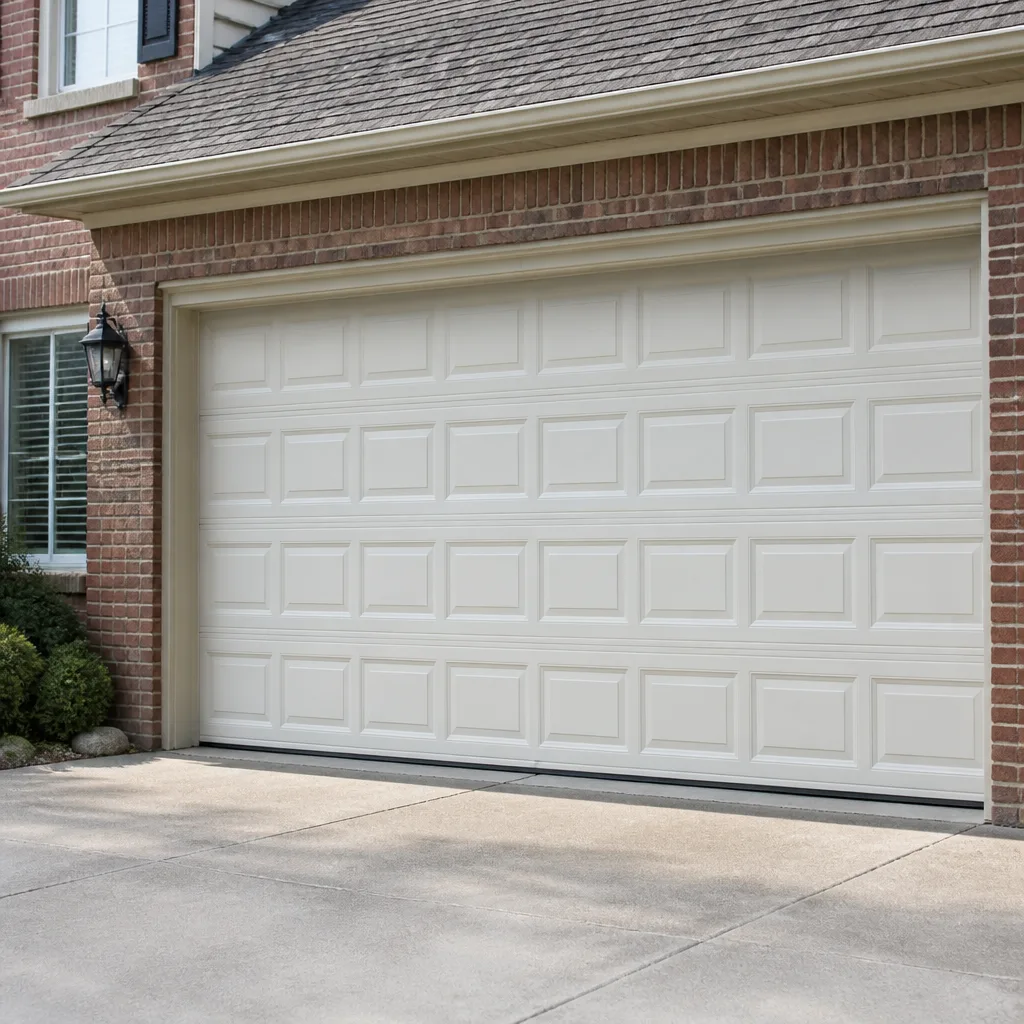 Raised-panel steel
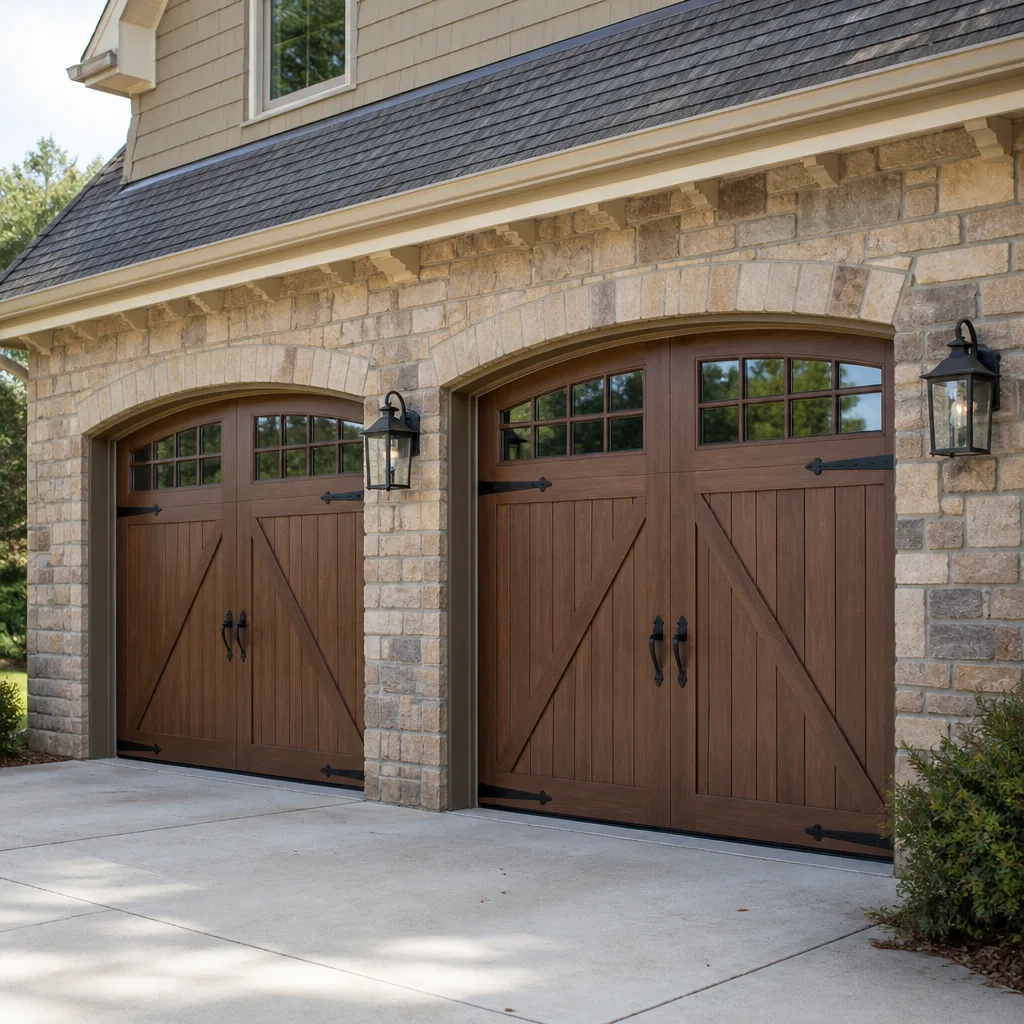 Carriage house
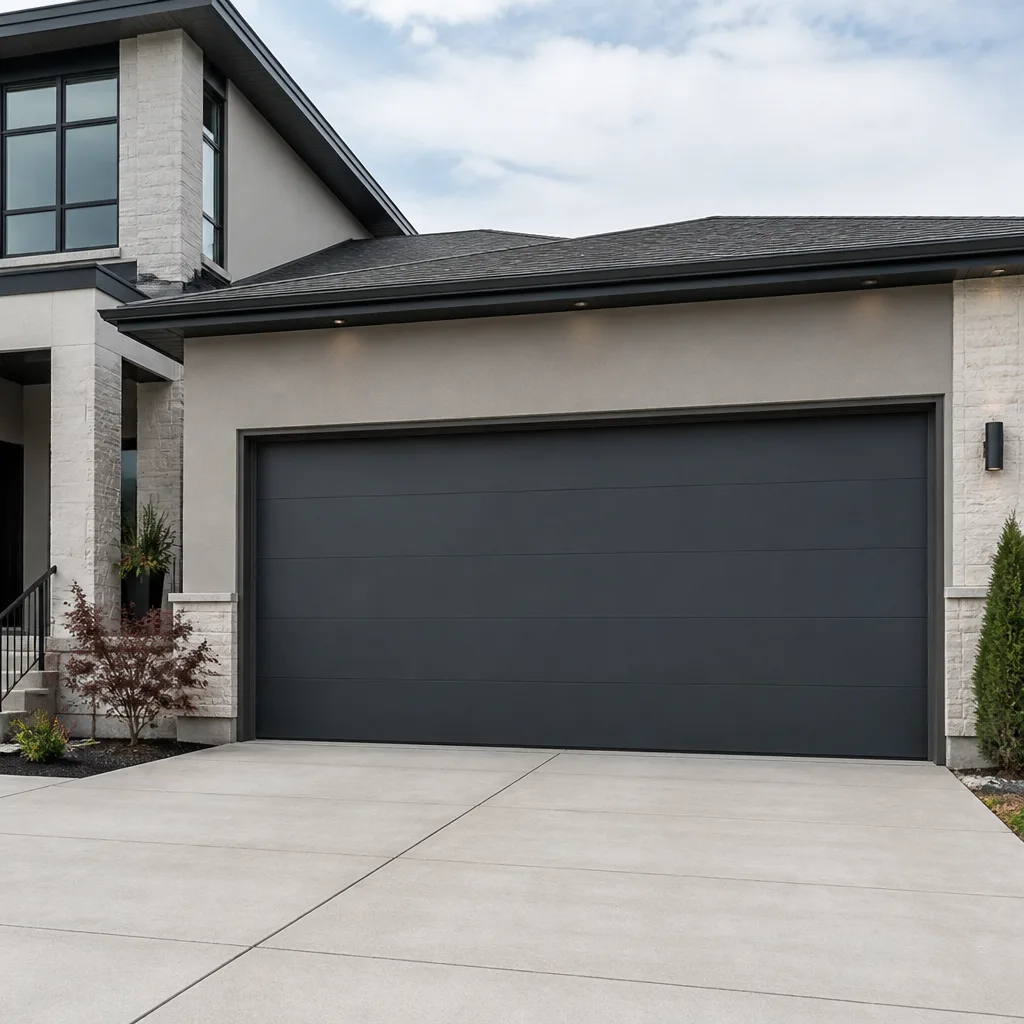 Modern flush
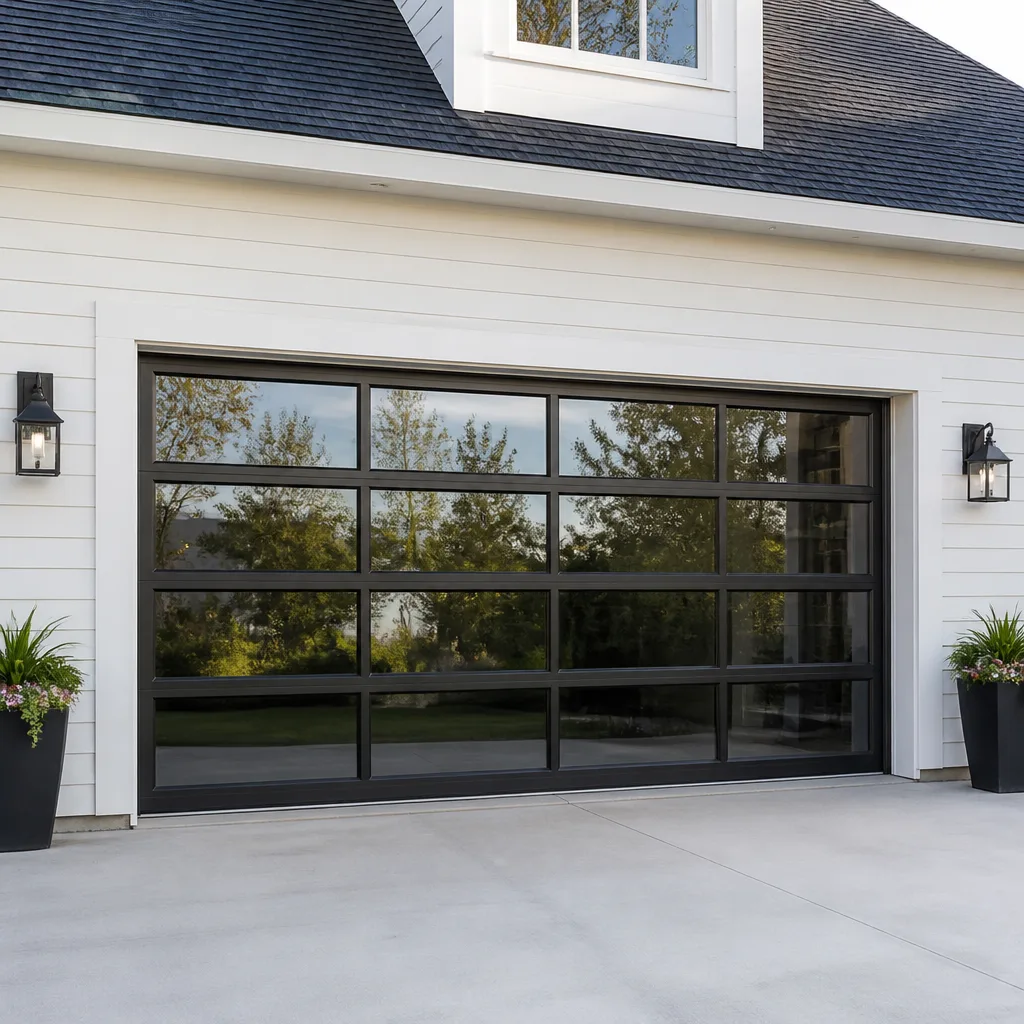 Full-view glass
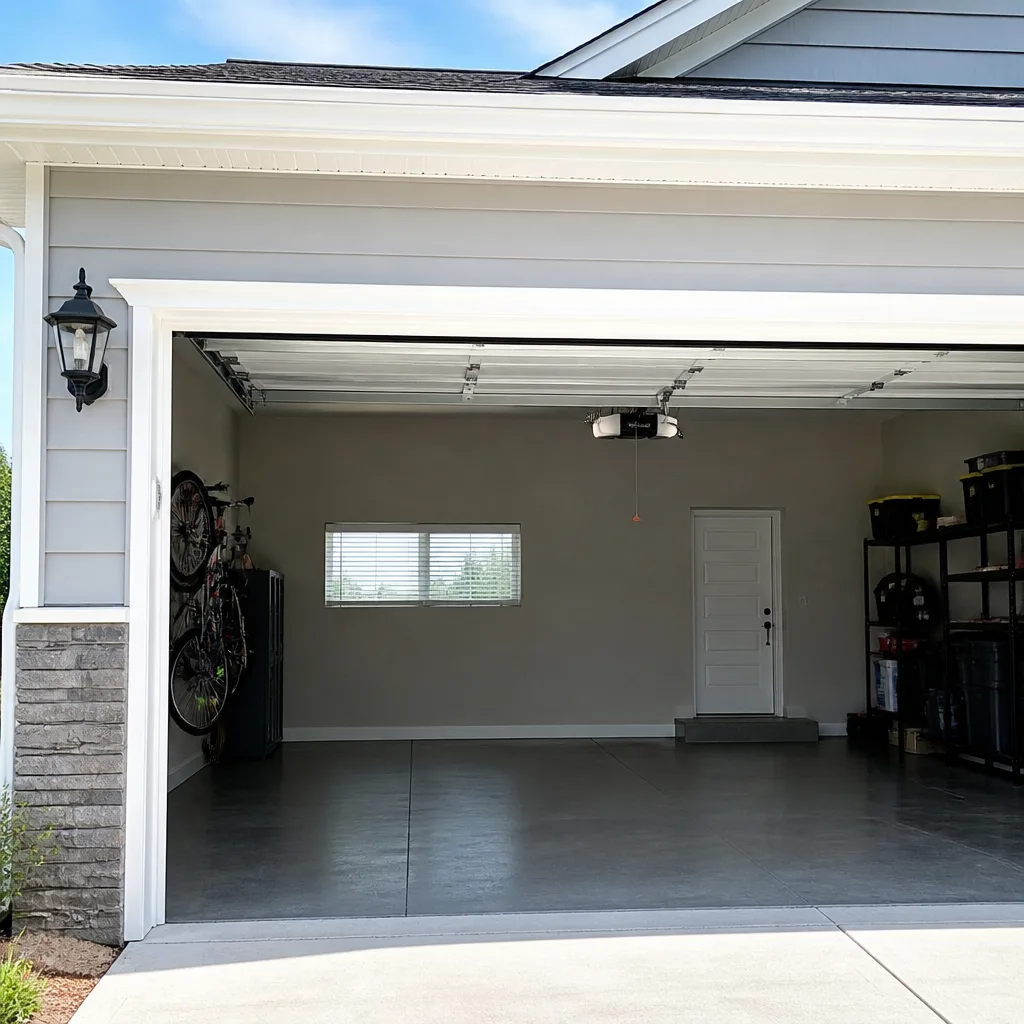 LiftMaster openers
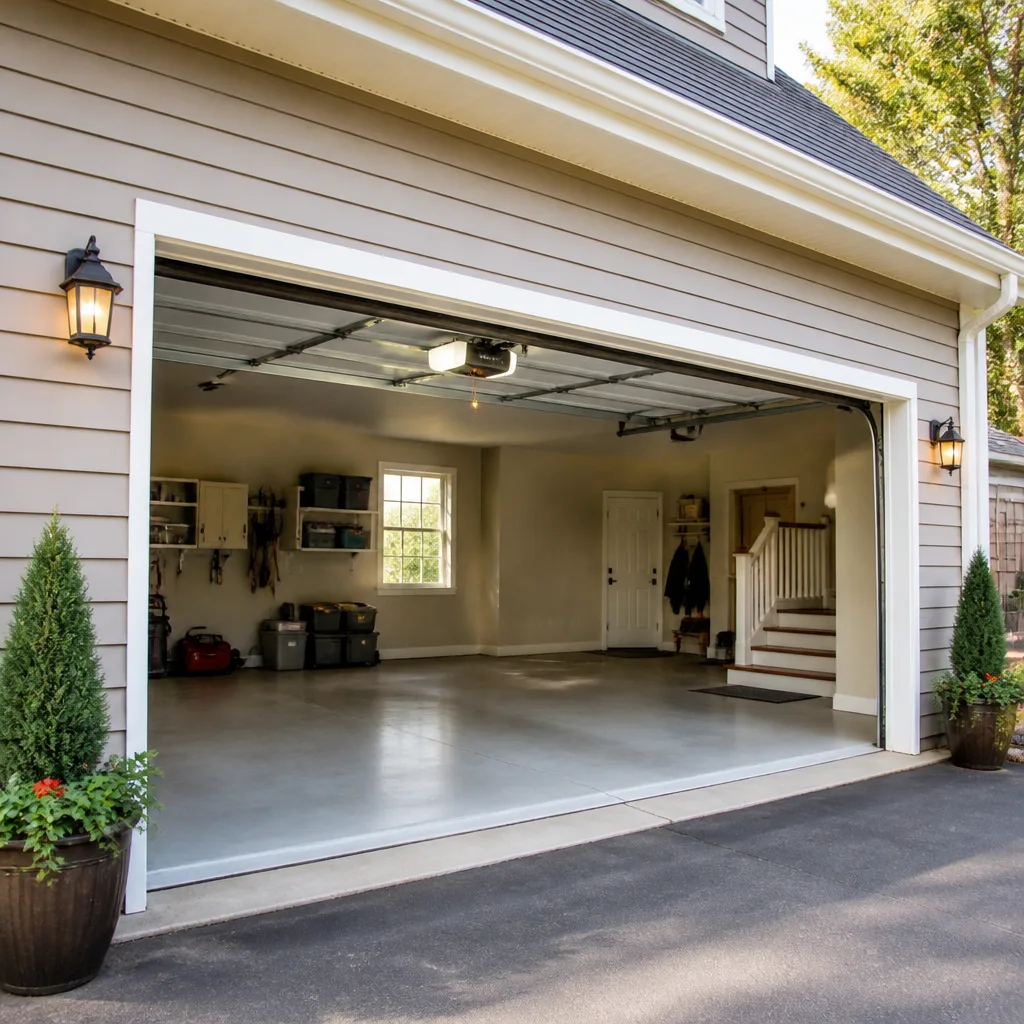 Chamberlain openers
Full 25-point door and opener safety check with every visit - springs, cables, rollers, tracks, and your LiftMaster or Chamberlain opener included
You get a price before we start. It does not change when the pro arrives.
Get your free estimateDIY vs Professional Garage Door: The East Flatbush Homeowner’s Decision Guide
Here’s the counterintuitive part: the DIY question for garage doors usually gets framed as a skill question, and it isn’t one. It’s a physics question. A torsion spring on a standard residential door stores enough rotational force that a single slipped winding bar can turn a hand tool into a projectile. That’s why the honest answer to “can I do this myself?” depends entirely on which part of the door we’re talking about. Lubrication, safety sensor alignment and remote programming are genuinely homeowner work. Springs, cables and opener wiring are not. This guide draws that line task by task, explains why East Flatbush garage layouts make some jobs riskier than the same job in a suburban driveway, and gives you three questions to run against your own door before you decide.
Quick Answer
You can safely handle lubrication, safety sensor alignment, remote and keypad programming, visual inspections and cleaning your own garage door tracks. You should not attempt torsion or extension spring replacement, cable replacement, drum and bearing work, or opener electrical repair. Those are the tasks where stored mechanical force or live wiring can injure you before you have time to react. Everything in between depends on your door’s configuration, and the sections below sort that out.
Styles & brands we work with
- Raised-panel steel
- Carriage house
- Modern flush
- Full-view glass
- LiftMaster openers
- Chamberlain openers
Table of Contents
- Why Spring Work Draws the Line So Sharply
- The Task-by-Task Breakdown: What’s Actually Safe
- Why East Flatbush Garage Layouts Make DIY Riskier
- What a DIY Mistake Actually Costs
- Partial DIY: How to Cut Your Billable Time
- Three Questions That Set Your DIY Ceiling
- Brand Matters More Than Most Homeowners Realize
- When DIY Stops and a Specialist Starts
Why Spring Work Draws the Line So Sharply
Garage doors are counterweight systems. The springs carry the weight of the door so a person, or an opener motor, only has to guide it. A torsion spring does this by being wound tight around a steel shaft above the door and held under tension by cables. When that spring breaks, or when someone unwinds it without the right tools and sequence, the stored energy has to go somewhere.
This is why we treat spring repair as a named specialty rather than a line item. It’s a high-tension, high-risk job that most general handymen decline outright, and they’re right to. The tools involved – winding bars, not screwdrivers – exist specifically because the force is too large for hand pressure alone. Winding bars are sized to the spring, inserted in matched pairs, and rotated in a controlled sequence that keeps the shaft balanced. Without that, the shaft can spin free and the bars leave your hands.
There’s a second layer most tutorials skip: the cables. They’re under tension from the spring, and a cable under load can whip with serious force if it’s cut or released while wound. We’ve seen the aftermath of that more than once. It’s the reason our technicians treat cable work with the same caution as spring work.
What “stored energy” means in practical terms
You don’t need the exact torque figure to make a good decision. You need to understand that the danger isn’t the door falling – it’s the hardware. Springs, cables, drums and brackets are all loaded while the door is closed. That means a door sitting quietly in a closed East Flatbush garage can still be a loaded system. If a spring has snapped, that door is not safe to operate until a specialist has assessed it, and it’s not safe to poke at either.
The same logic applies to opener wiring, though for a different reason. Openers run on household current at the motor, and a miswired connection is an electrocution hazard, not a mechanical one. If your opener has a wiring fault, a burned-out capacitor or a failed logic board, that’s an electrical job. Call for garage door opener repair rather than opening the housing yourself.
The Task-by-Task Breakdown: What’s Actually Safe
This is the section to bookmark. We split garage door maintenance into three tiers based on what can go wrong, not on how hard the task looks. Plenty of “easy” jobs have a nasty failure mode, and plenty of “hard” jobs are just tedious.
Tier 1: Homeowner-safe tasks
- Lubrication. A garage door has hinges, rollers, and a track that benefit from periodic lubrication. Use a garage-door-specific lubricant, not general-purpose grease, and avoid the plastic rollers most modern doors use – those don’t need oil.
- Safety sensor alignment. The two sensors at the bottom of the track should face each other and light up steadily. If one is knocked out of line, the door reverses on closing. Straightening the bracket so both lights are solid is a five-minute job.
- Remote and keypad programming. Pairing a new remote to a LiftMaster, Chamberlain or Genie opener is a matter of pressing the learn button and following the manual. It’s the same process whether you do it or we do.
- Visual inspection. Look at the springs for gaps or a visible break, check the cables for fraying, and watch the door travel for wobble. You’re not fixing anything – you’re gathering information for a call.
- Track cleaning. Wiping debris and grit out of the track is safe and helps the door run quietly.
- Testing the auto-reverse. Place a roll of paper towels under the door and confirm it reverses on contact. This is a safety check worth doing monthly.
Tier 2: Judgment calls – depends on your door
- Roller replacement. On a door with extension springs and a clear, unobstructed workspace, swapping rollers is within reach for a careful homeowner. On a torsion system, or a door with limited clearance, it isn’t.
- Weatherstripping and bottom seal replacement. Generally safe, but only if you can reach the full width of the door without standing on anything unstable.
- Track bracket adjustment. Minor track realignment is doable if the door is fully closed and disconnected from the opener. Anything more than a slight nudge is a sign something else has moved.
- Opener force and travel limits. Adjusting the up and down limits on a LiftMaster or Chamberlain unit is safe if you follow the manual precisely. Adjusting force settings to mask a problem is not.
Tier 3: Stop – professional only
- Torsion and extension spring replacement. Full stop. This is the single most dangerous task on any garage door.
- Cable replacement or re-tensioning. The cables are the spring’s load path. Any work here is spring work.
- Drum, bearing plate and center bracket work. These hold the shaft that the spring winds against. Not a homeowner job.
- Opener electrical repair. Capacitors, logic boards and wiring. Live current, no exceptions.
- Panel replacement on a damaged door. A bent panel has usually shifted the door’s balance, which means the spring system needs re-checking too.
- Any work on a door that’s off-track or hanging. Do not try to guide it back by hand.
Why East Flatbush Garage Layouts Make DIY Riskier
Garage doors are the same everywhere in one sense – the physics doesn’t change by ZIP code. What changes is the space around the door, and space is exactly what makes spring and cable work manageable or not.
In much of East Flatbush, garages sit at the back of a lot or under the rear of the house, accessed through a narrow driveway or a shared alley. That geometry produces a set of conditions that suburban driveways don’t:
- Low headroom. Many East Flatbush garages have less clearance above the door than a standard install would like. Low-headroom setups often use a different spring configuration or a modified track, which means a generic tutorial doesn’t match what’s actually above your door.
- Concrete walls and tight side clearance. Detached garages in East Flatbush are frequently masonry structures. You can’t lean a ladder against a concrete block wall the way you can against siding, and there’s often no room to work beside the door.
- No second person in the room. Rear-lot garages are small. When something goes wrong during a DIY attempt, the nearest help may be through the house and out the front door.
- Weather exposure. Doors facing an alley or rear lot take more rain and freeze-thaw cycling than a covered suburban door. That accelerates wear on springs and rollers, and it means DIY attempts happen on parts that are already tired.
- Access and parking. If you’re mid-project and can’t get the door working, your car is blocked. That’s a different kind of pressure than a suburban driveway where the car can sit for a week.
None of this makes East Flatbush homeowners less capable. It makes the margin for error thinner, and a thinner margin is the whole argument for letting a specialist take the loaded parts. Our technicians work in these configurations regularly, which is why the first thing we do on a low-headroom door is look at the spring setup and track geometry before touching anything.
What a DIY Mistake Actually Costs
Every conversation about DIY pricing has to be honest about what it excludes, so we’ll keep it qualitative. A failed spring repair rarely ends with a broken spring. Here’s what a mistake typically produces:
- Replacement parts you now need twice. A slipped winding bar can bend the shaft or damage a drum. The spring was one cost; the shaft, drum and bearing plate are a second and larger one.
- An ER visit. Hand and wrist injuries are the common outcome, and the cost of an emergency visit dwarfs the cost of a professional spring replacement by a wide margin. We won’t put a figure on that because we don’t have one to give you – just know it’s the most expensive line in this list.
- A correction fee. When a professional arrives at a partially disassembled door, the first thing they do is assess whether the system can be safely brought back. That assessment and the corrective work add time and cost to what would have been a straightforward job.
- Collateral damage. A loose drum, a released cable or a dropped winding bar can take out a car window, a side mirror, a panel, or the opener rail above the door.
- Lost access. If the door won’t close, the garage is open. In an East Flatbush rear-lot setup, that means anything stored there is exposed until it’s fixed.
Compare that to the alternative. Spring replacement is a scheduled job with a written price agreed before any work starts, and the parts are matched to your door and to your opener brand. For a fuller look at typical figures in the area, see our garage door repair East Flatbush page, and ask for a free estimate on your specific door.
Partial DIY: How to Cut Your Billable Time
This is the part of the DIY conversation most people miss. You don’t have to choose between doing everything and doing nothing. There’s a middle path that saves real money without touching anything dangerous, and it’s the one we recommend most often.
Before a technician arrives
- Make a note of the model and brand. LiftMaster, Chamberlain, Genie, Raynor – knowing which one you have, and the model number off the opener or door label, means the technician can arrive prepared rather than diagnosing from scratch.
- Clear the garage floor. Spring repair and track work both need a clear work zone. Cleared floor space is billable time you don’t spend watching us move boxes.
- Note the symptoms precisely. Does the door run and stall, or not move at all? Does the opener click without moving the door? Is the noise coming from above the door or from the opener rail? A precise description is diagnostic gold.
- Photograph the spring if you can do it safely from the floor. Never climb to look. A photo taken from standing height of the spring assembly helps the technician know what tools and parts to bring.
- Check the safety sensors first. Many “the door won’t close” calls are a knocked-out sensor, which is a Tier 1 fix you can do yourself in five minutes.
After a technician leaves
- Program your own remotes and keypads. If the opener was replaced or reprogrammed, doing the pairing yourself is a safe way to finish the job.
- Run the lubrication yourself. The technician can point out the specific points; you can oil them afterward.
- Replace weatherstripping. If the door is working correctly, the seal around it is a safe follow-up project.
- Keep a maintenance note. Record what was replaced and when, so the next visit starts with information instead of a diagnosis.
Handled this way, a professional visit is limited to the work that needs a specialist. That’s how we prefer to quote it. The free estimate is free whether the job is a full spring replacement or an opener adjustment, and our technicians have up to 14 years of experience reading doors that look identical but behave very differently.
Three Questions That Set Your DIY Ceiling
Before you decide which tier a job falls in, answer these three questions honestly about your own door. They’re the same ones we use at the start of any job.
- Is the spring above the door, or is it running alongside the tracks? A spring above the door on a steel shaft is a torsion system. A spring running horizontally above each track is an extension system. Both are dangerous, but the failure modes differ, and the safe way to work on each is different. If you can’t identify which one you have from the floor, that alone tells you the DIY ceiling is the floor.
- Do you have full, flat, unobstructed standing room across the width of the door? For any task above eye level, this has to be yes. A ladder against a concrete wall in a narrow East Flatbush side yard is not the same as a ladder on open concrete. If the answer is no, treat the job as out of reach.
- Is the door balanced and working right now? If the door is off-track, hanging, or has a visibly broken spring, it’s not a DIY job at all. It’s a call. Balance issues can also be a symptom of a fatigued spring, which means the door shouldn’t be operated while you investigate.
If all three answers point toward safe conditions, you’re cleared for Tier 1 work and most of Tier 2. If any of them is a no or a “not sure,” that’s where the DIY ceiling sits. Our guide to garage door repair covers what to expect when a professional assesses a door in that condition.
Brand Matters More Than Most Homeowners Realize
One more factor deserves its own section: the brand of your door and opener changes what “fixing it” actually means. A generic approach to a LiftMaster opener and a generic approach to a Genie opener don’t produce the same result, and the same goes for Clopay or Amarr doors versus a Wayne Dalton unit.
This is why we name the systems we work with rather than saying “all brands.” Our technicians are equipped to service systems from LiftMaster, Chamberlain, Genie, Clopay, Amarr, Wayne Dalton, Craftsman and Raynor. That matters for a homeowner weighing DIY, because the parts most tutorials assume you’ll find at a big-box store often aren’t the part your specific door needs. A retrofitted part can mask a problem for a few months and then fail under load, which is how a small job becomes a bigger one.
Brand familiarity also cuts down the diagnostic time on a call, and that saves you money. When a technician already knows how a LiftMaster travel limit behaves or how a Chamberlain safety sensor pairs, the visit is shorter. If your opener is failing and you’ve already checked the sensor alignment (Tier 1), the next step is the opener itself.
If you’re replacing rather than repairing, brand choice becomes a decision in its own right. Our garage door installation page covers how that works: measure, order, schedule, install. It’s not same-day work, and no honest company will tell you it is.
When DIY Stops and a Specialist Starts
Here’s the short version of everything above. You handle lubrication, sensor alignment, remote programming, visual inspection, cleaning and testing. A specialist handles springs, cables, drums, bearings, track realignment beyond a minor nudge, and anything electrical inside the opener.
And there are scenarios where the decision makes itself. A door that won’t close because a spring has snapped is a same-day problem if the garage is open to the alley or one of the neighboring streets in East Flatbush. A car trapped behind a dead opener is a same-day problem. A door hanging off its track is a safety problem, not a project. Emergency garage door service exists for exactly these situations, and calling is the right move when the door’s failure has created an access or security issue that can’t wait.
The goal of this guide isn’t to talk you out of DIY. It’s to make the line clear so you stop second-guessing it. Once you can say “this is Tier 1, I’ll handle it” or “this is Tier 3, I’m calling,” the decision takes about ten seconds.
Common Mistakes to Avoid
- Using WD-40 or general grease on the tracks. It attracts grit and can make the door run louder within weeks. Use a garage-door-specific lubricant, and never spray the plastic rollers. In an East Flatbush garage where dust and debris blow in from a rear alley, the wrong lubricant becomes an abrasive paste.
- Adjusting the opener’s force setting to compensate for a stiff door. The force setting is a safety limit, not a power boost. If the door needs more force to move, the problem is in the door, usually a fatigued spring. Cranking up the force just hides the symptom until the opener fails.
- Cutting a cable that looks loose. A cable that’s slack because the spring has already snapped can still be under load from the door’s weight. Never cut a garage door cable. There is no safe way to do it at home.
- Working alone in a small, enclosed garage. Low headroom and tight clearance are common in East Flatbush rear-lot garages. If you can’t get out from under the door quickly, that’s the signal to stop, not a reason to be more careful.
- Assuming a broken spring is just a broken spring. When a torsion spring breaks, it can leave the door unbalanced and the cables relaxed in a way that’s already off-normal. A door that looks fine after a spring failure may not be.
- Buying a replacement opener before checking the sensor and remote. More “dead opener” calls resolve at the sensor or the remote than homeowners expect. Do the Tier 1 checks first, then call if the door still won’t behave.
- Trying to force a door back onto its track by hand. A door that’s off-track is a loaded system. Pushing it back into place risks a panel dropping or a cable snapping. Leave it where it is and call.
See the difference
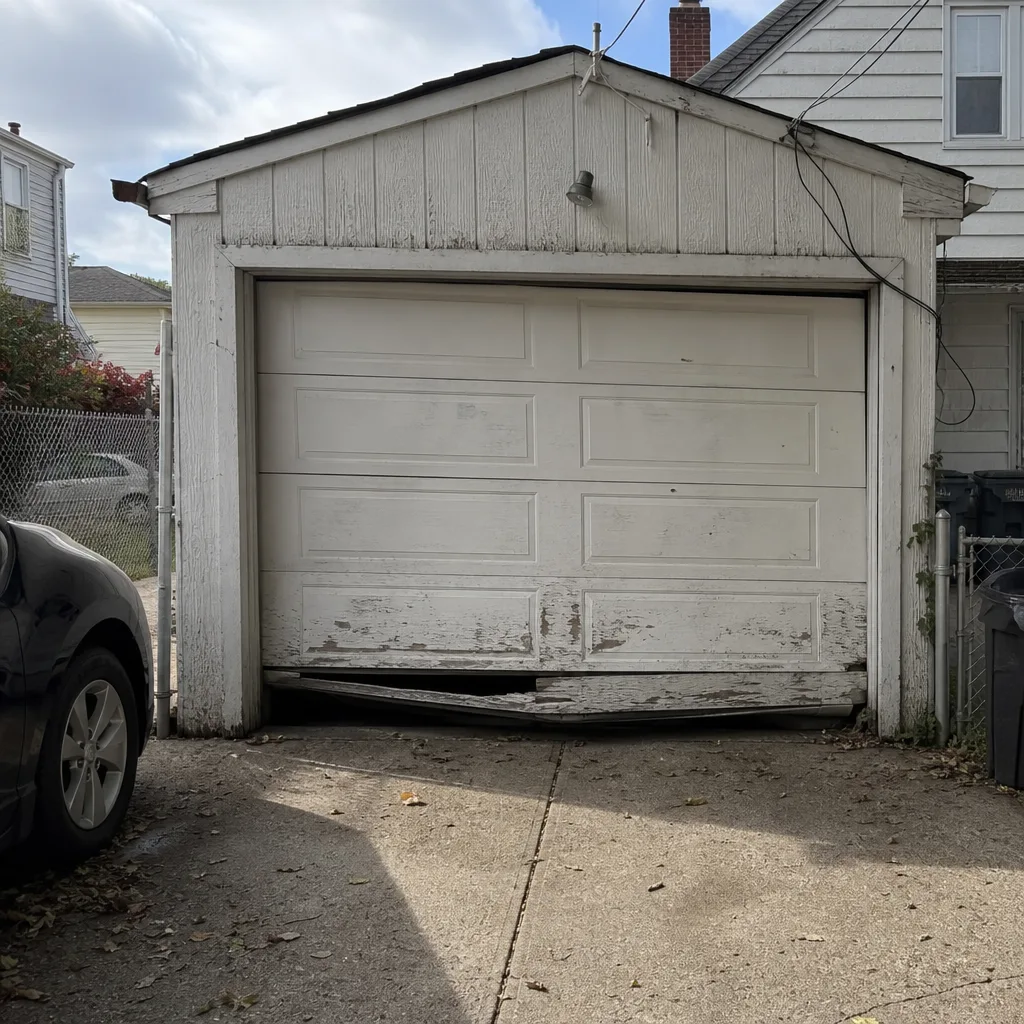 Before
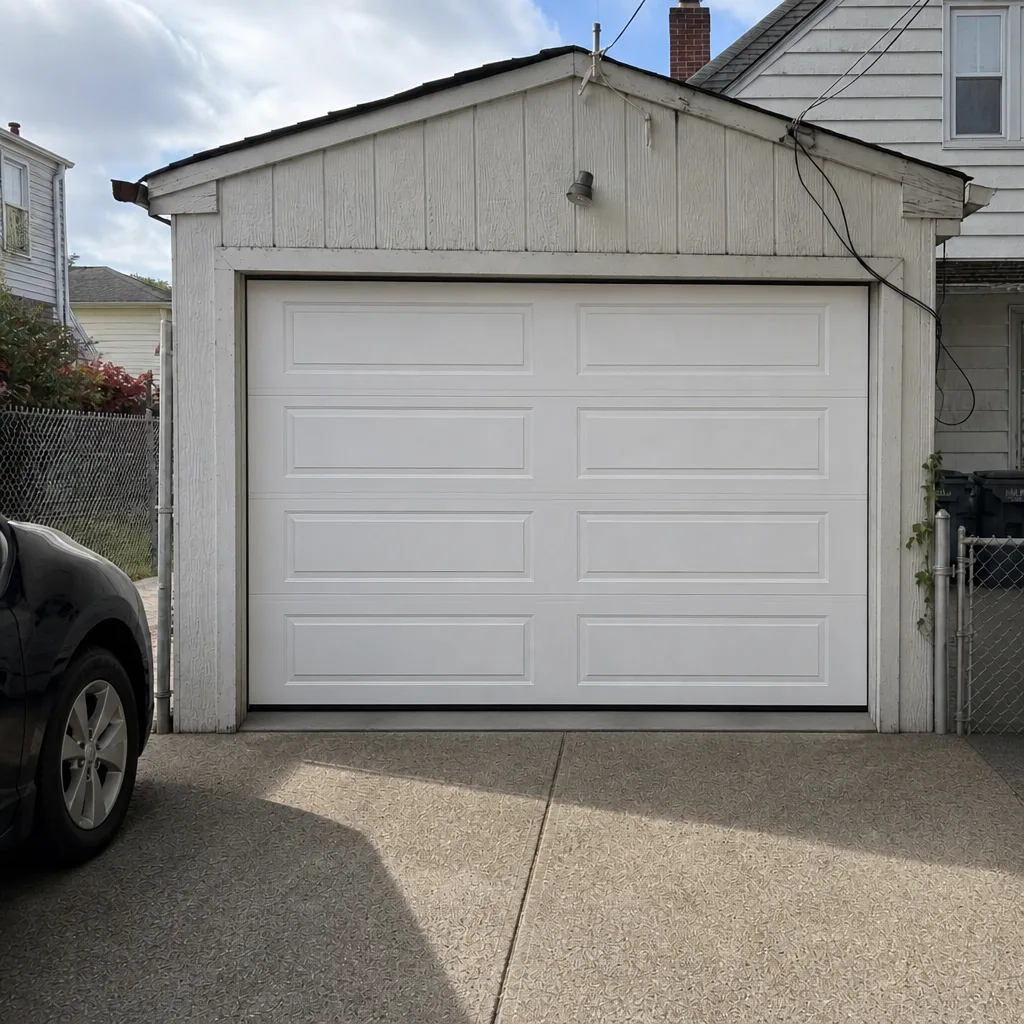 After
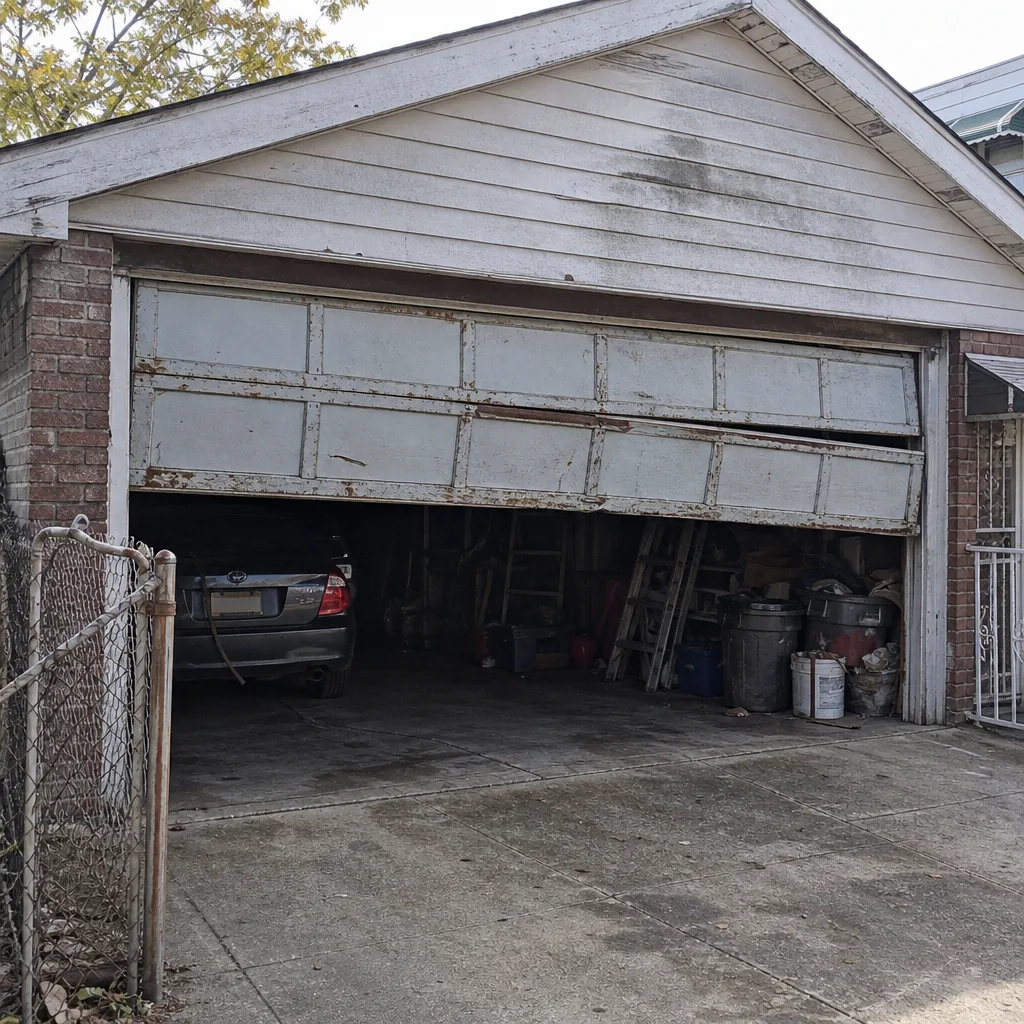 Before
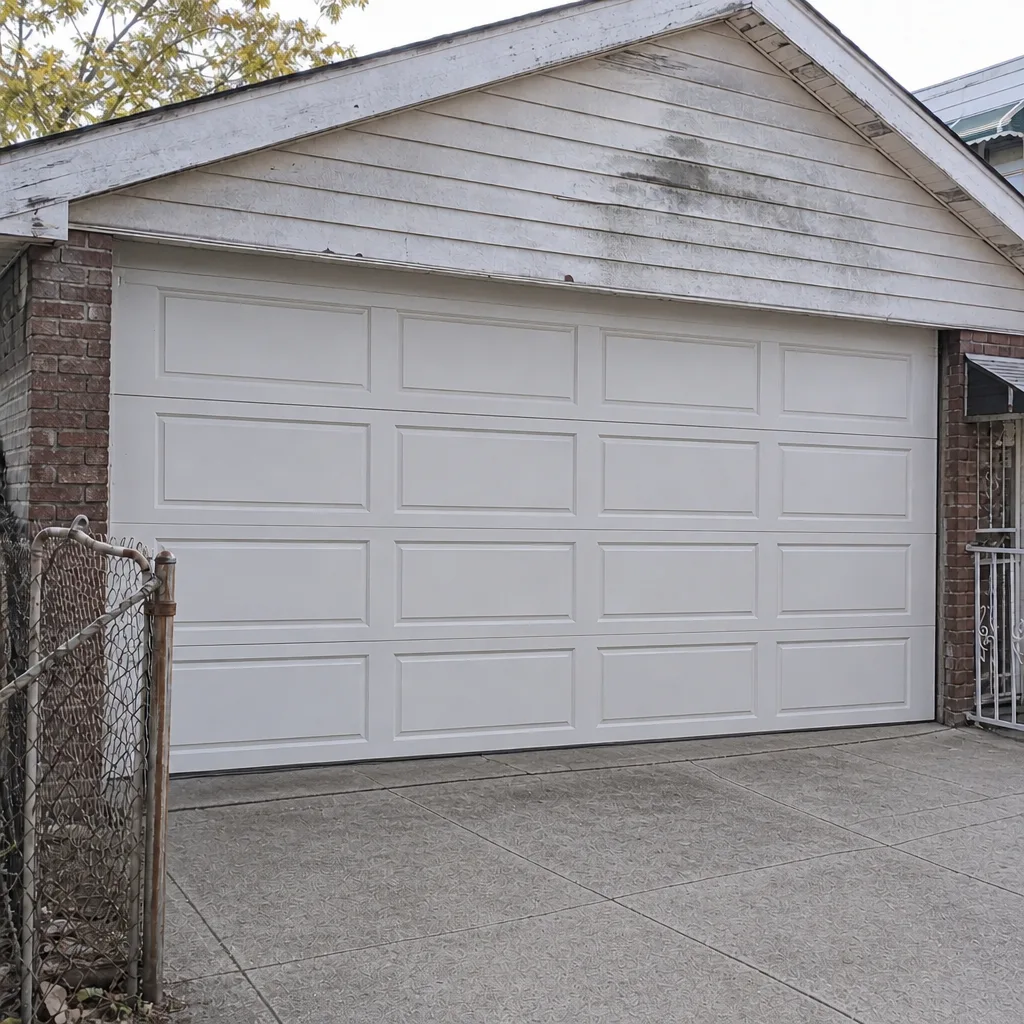 After
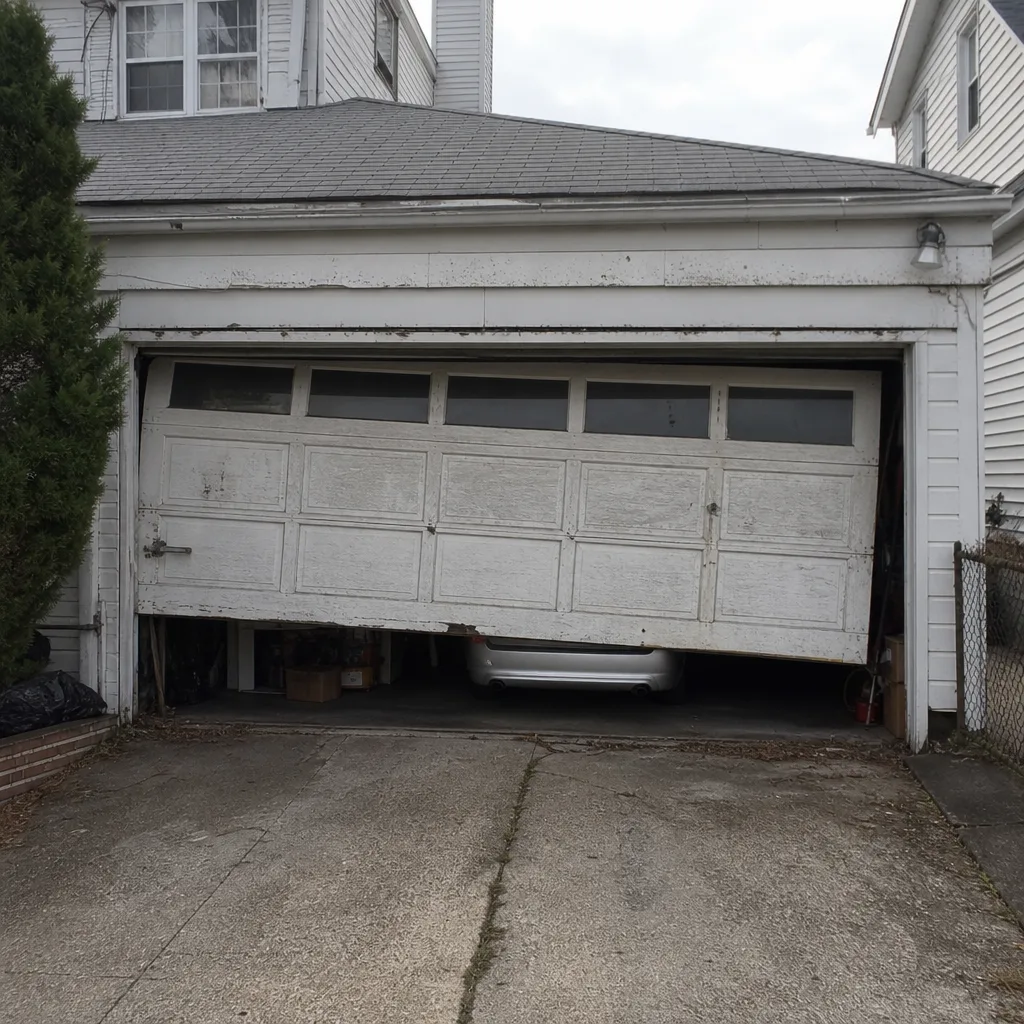 Before
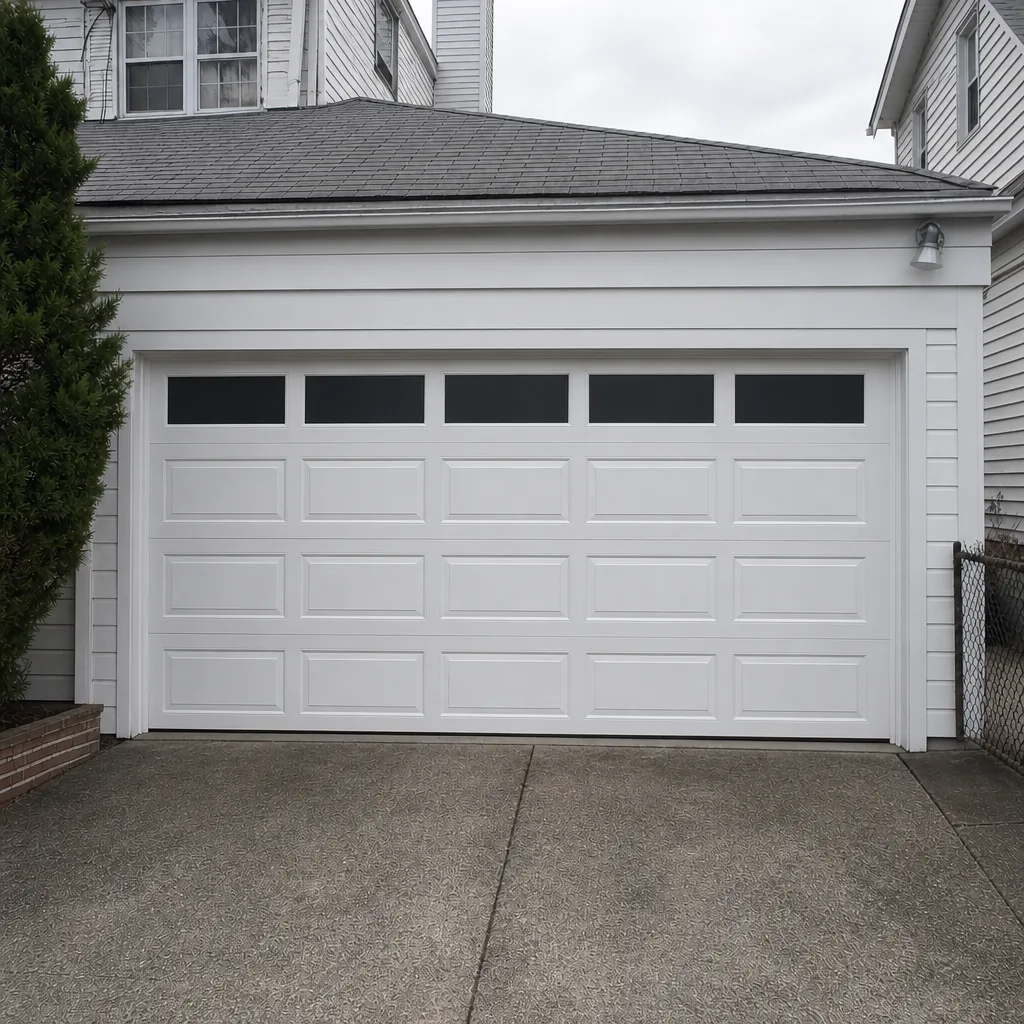 After
When to Call a Professional
Call when the task is on the loaded parts list – springs, cables, drums, bearings, brackets that hold the shaft – or when the opener won’t respond to the Tier 1 checks. Call when the door is off-track, hanging, or won’t close all the way, and call when a snapped spring has opened the garage to a rear alley or a shared lot in East Flatbush. Call when you can’t identify what type of spring you have from the floor. Call when the door’s balance feels off, or when it slams shut instead of closing at a controlled pace. And call when the failure has created a security or access problem that can’t sit for a day or two.
Garage Door Repair East Flatbush offers free estimates in East Flatbush – call (855) 658-4194. The price is quoted and agreed before any work starts, and our technicians focus on garage doors only.
Frequently Asked Questions
You should not. Torsion and extension springs store enough force to cause serious injury if a winding tool slips or a cable releases, and no tutorial changes that. A torsion spring alone can be holding roughly 100 foot-pounds of torque, and the tools and sequence required to wind it safely are professional equipment. Call (855) 658-4194 for a free estimate on a spring replacement.
Spring repair is quoted per job and per spring, and the final price depends on whether you have a torsion or extension setup, the door’s weight and the parts needed. A matched pair is usually replaced together, so a pair costs more than a single spring. We give a free written estimate before any work begins. Call (855) 658-4194 for an exact quote.
Yes, emergency garage door service is available for situations where a malfunctioning door has left the garage open or your car blocked. Same-day service is the right fit for a snapped spring, a dead opener or a door off its track. Call (855) 658-4194 and we’ll get a technician out as fast as the day allows. If it’s a spring, do not try to close the door by hand in the meantime.
No. The price we quote and you agree to is the price you pay, and any change to the scope of work is discussed and approved before we touch anything. The written estimate sets the final price. That’s true whether the job is a spring replacement, an opener repair or a full installation. Call (855) 658-4194 to book a free estimate.
The local professional we connect you with is licensed and insured as their state requires, and every technician focuses on garage doors exclusively rather than general handyman work. Our technicians have up to 14 years of experience with systems from LiftMaster, Chamberlain, Genie, Raynor and the other major brands. Call (855) 658-4194 and we’ll match you with the right specialist.
Yes, and you should. Pairing a remote or keypad on a LiftMaster, Chamberlain, Genie or Raynor opener is a safe homeowner task – press the learn button, follow the manual, done. Only call if the remote won’t pair after a battery change and a reset, or if multiple remotes fail at once, which usually points to the opener’s logic board.
The Bottom Line
The DIY decision for a garage door isn’t about how confident you feel. It’s about which parts of the system are holding stored force. Lubrication, sensor alignment, remote programming and visual inspection are yours to handle, and handling them keeps your billable time down. Springs, cables, drums and opener wiring belong to a specialist, and in East Flatbush’s tighter, low-clearance garages, that line matters more than it does on an open suburban driveway. Answer the three configuration questions, sort the job into the right tier, and act. If it lands in Tier 3, call Garage Door Repair East Flatbush at (855) 658-4194 for a free estimate.
Written by the team at Garage Door Repair East Flatbush.