Last updated November 21, 2026
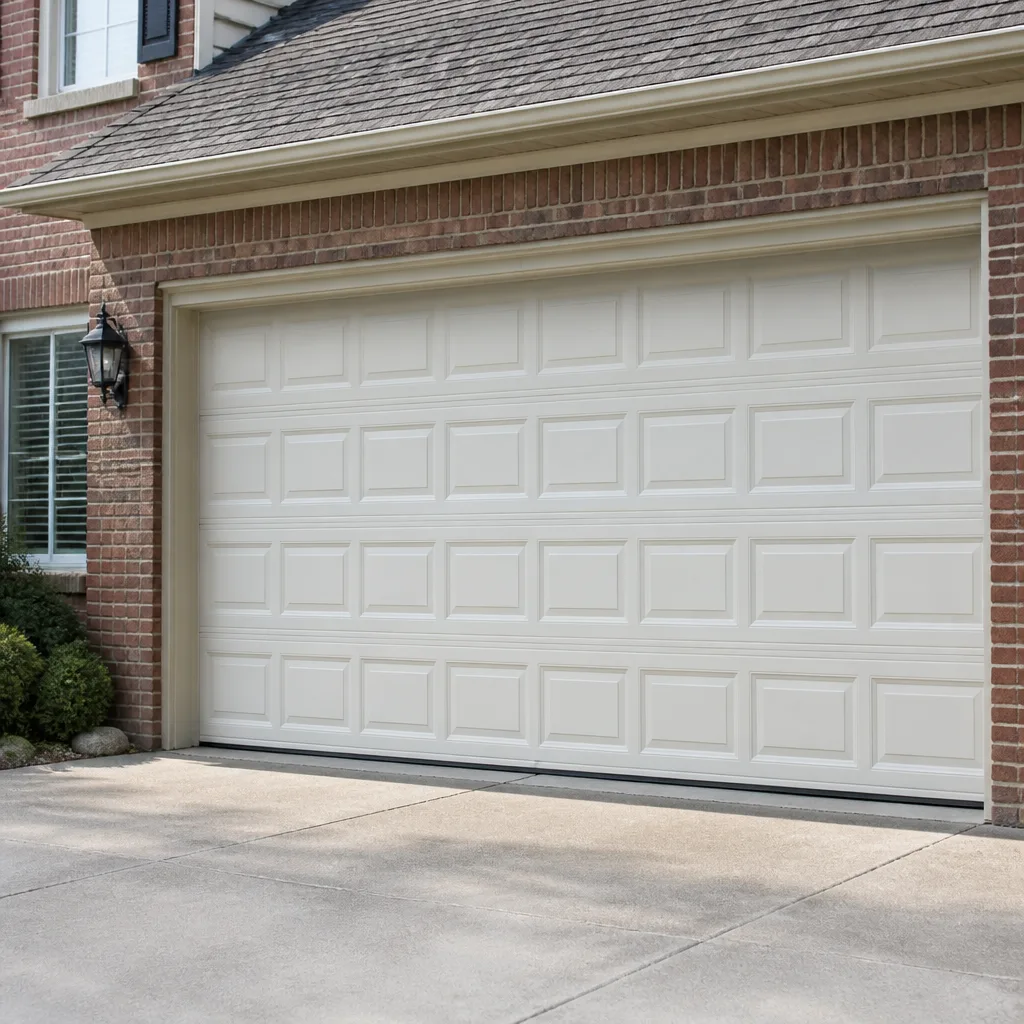 Raised-panel steel
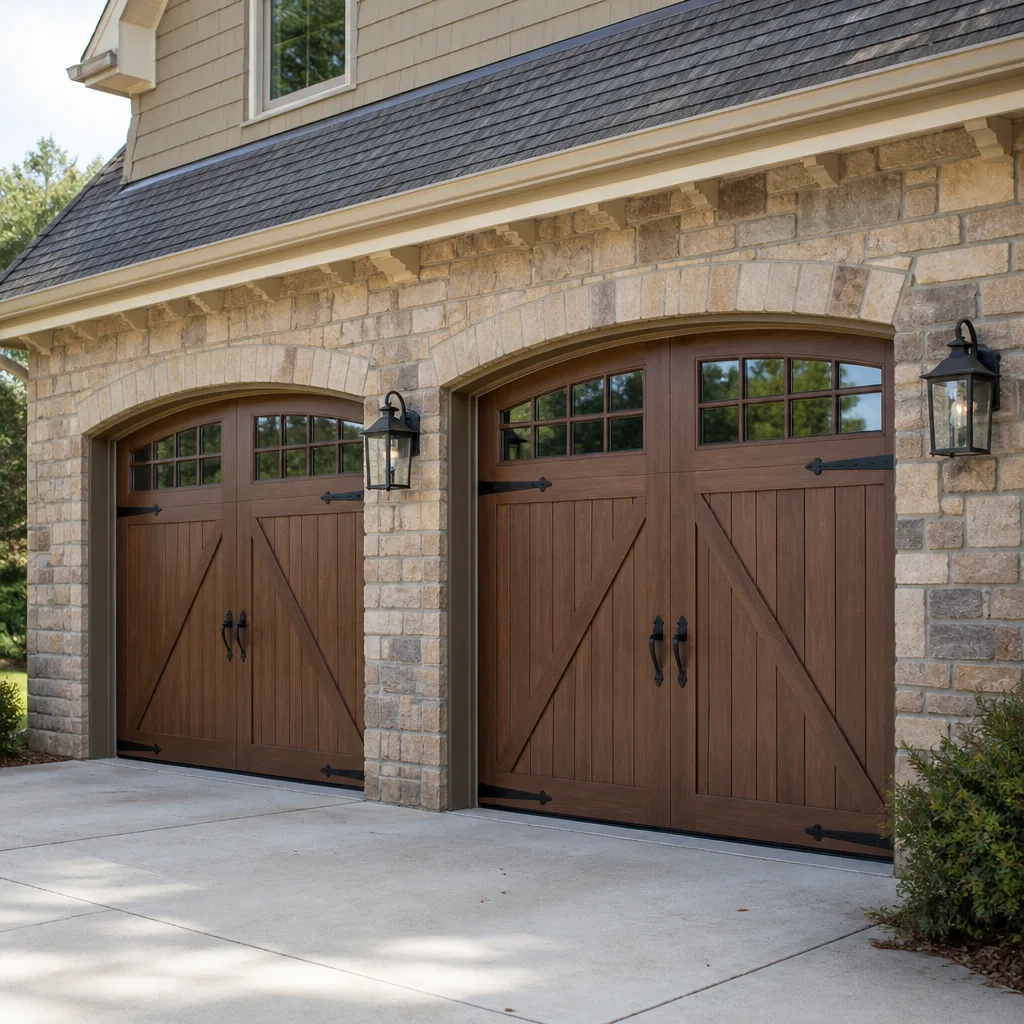 Carriage house
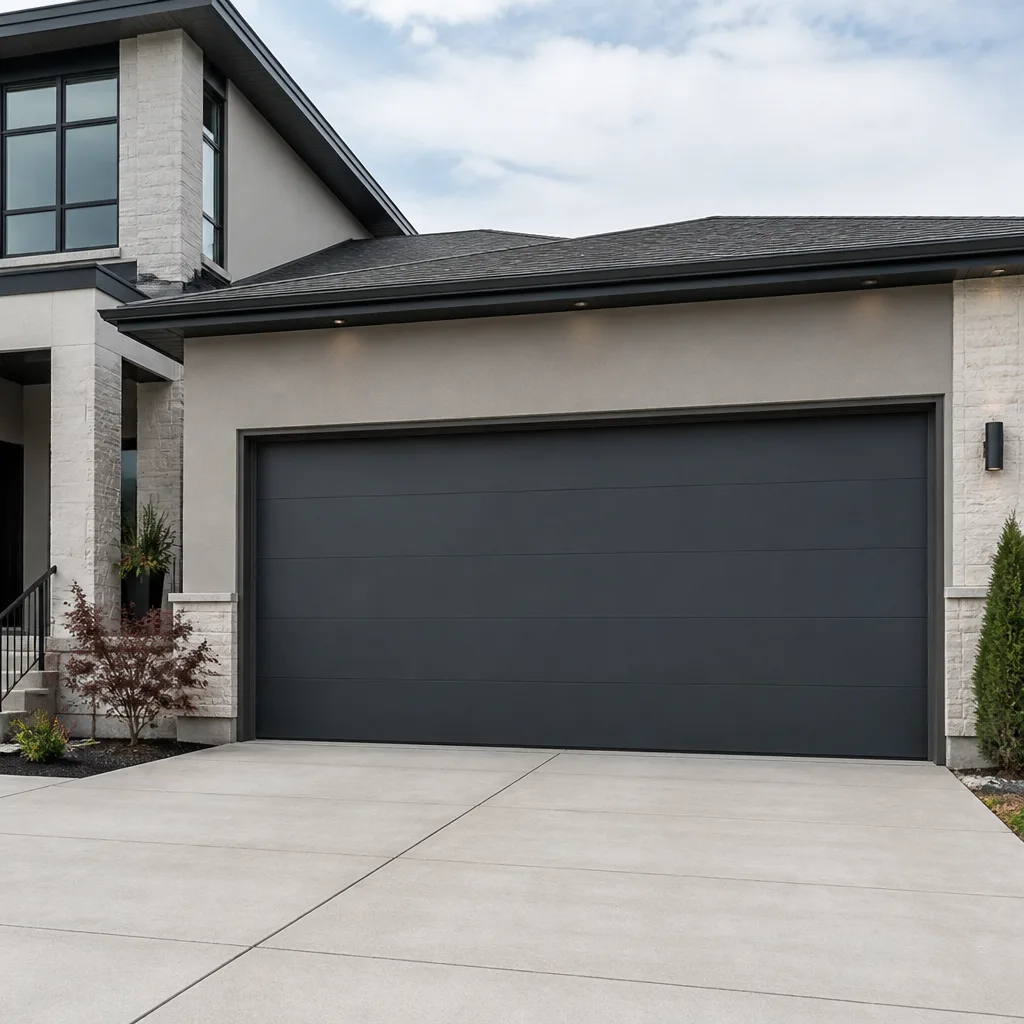 Modern flush
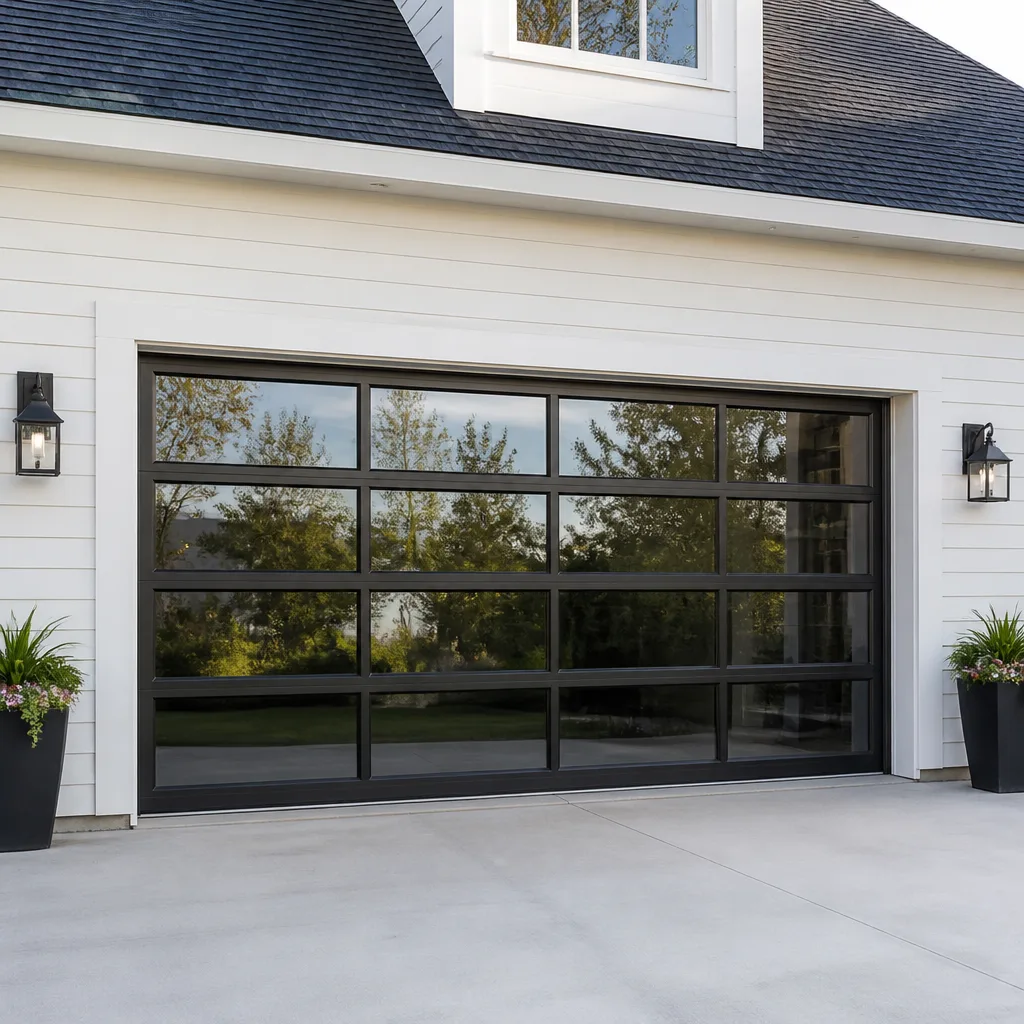 Full-view glass
 LiftMaster openers
 Chamberlain openers
Full 25-point door and opener safety check with every visit - springs, cables, rollers, tracks, and your LiftMaster or Chamberlain opener included
You get a price before we start. It does not change when the pro arrives.
Get your free estimateGarage Door Emergency Preparedness Guide for East Flatbush Homes
When a torsion spring snaps at night and your car is inside, the wrong move is pulling the emergency release cord. On an unbalanced door with one broken spring, that cord can let the door drop fast enough to destroy the vehicle beneath it – or worse. Most East Flatbush homeowners have a technician saved in their phone but no idea what to do in the 45 minutes before help arrives. That gap is where mechanical failures turn into security breaches or injuries. This guide walks through the protocol: the right immediate response for each common failure, how to secure a door stuck open, and what to have ready before you call.
Quick Answer
If your garage door fails, stop using the opener immediately, keep people and vehicles clear of the door, and do not pull the manual release on a door with a suspected broken spring. Call a garage door specialist, tell them the door’s make, the opener model, and what happened right before it failed. If the door is stuck open, secure the opening from the inside first. A trained technician can assess spring, track, and opener failure safely; a homeowner cannot.
Styles & brands we work with
- Raised-panel steel
- Carriage house
- Modern flush
- Full-view glass
- LiftMaster openers
- Chamberlain openers
Table of Contents
- Know Your Door Before Something Breaks
- The First Five Minutes After a Broken Spring
- Door Off-Track: What to Do and What Not to Touch
- Opener Failure With Your Car Trapped Inside
- Using the Manual Release Safely in a Power Outage
- Security Protocol for a Door Stuck Open in East Flatbush
- What to Have Ready Before You Call an Emergency Technician
- Is It Safe to Wait Until Morning?
Know Your Door Before Something Breaks
Preparedness starts weeks before any failure. The single most useful thing you can do is write down the specifics of your system while everything still works. When a door is jammed and your car is behind it, you don’t want to be squinting at a faded label in the dark.
Walk out to your garage on a normal day and record the following:
- Door manufacturer. East Flatbush has a wide mix of housing stock, from older detached garages behind brick rowhouses to newer construction near the neighborhood’s main corridors. Clopay and Wayne Dalton doors are common on residential builds here, and knowing yours tells a technician which track hardware and panel system they’re dealing with.
- Opener brand and model. LiftMaster and Chamberlain units are the most common in East Flatbush homes, with Craftsman openers on many older installs and Raynor systems on some heavier doors. The model number is on a sticker on the motor housing, usually on the back panel or ceiling-mounted head.
- Spring type and count. Look above the door, along the header. A torsion spring runs horizontally on a shaft above the opening; extension springs run alongside the tracks. Note how many there are – most residential doors use one or two torsion springs paired together.
- Approximate door weight class. A single-car door versus a double-car door matters. So do insulated panels, which add weight and change spring sizing.
- Your opener’s manual. Snap a photo of the label and keep the photo in your phone. When you’re standing in a dark garage, that photo is worth more than the paper copy filed somewhere in the house.
If you’re unsure what you’re looking at, the safest path is a routine check before anything fails. A specialist can identify your system, flag worn springs or frayed cables, and tell you what to watch for. For ongoing repair needs around the neighborhood, our garage door repair service covers everything from spring replacement to track realignment.
The First Five Minutes After a Broken Spring
A broken spring usually announces itself with a loud bang that sounds like a gunshot or a car backfire. It can happen while the door is opening, closing, or even sitting still. If you heard that sound, assume the spring broke and act accordingly.
Here’s the correct immediate sequence:
- Stop the opener. Don’t press the button again to “see if it works.” A motor pulling against a broken spring can bend the door’s center bracket, damage the opener’s gear assembly, or snap a cable.
- Keep everyone back. A broken spring leaves the door unsupported. On a two-spring door, one broken spring means the remaining one is carrying twice its intended load. Warn kids and guests not to touch the door or the opener.
- Do not pull the manual release cord. This is the most common mistake. On an unbalanced door, releasing the opener means the door’s full weight is held only by the tracks and your own hands. It can come down fast and hard.
- Do not try to move the door. Not by hand, not with a pry bar, not by pushing from inside. Torsion springs are under extreme tension, and cables under a broken spring can whip with fatal force.
- Check whether your car is trapped. If a vehicle is inside and you need it, that’s a call to a specialist, not a reason to force the door. A technician can safely raise a door with a broken spring using proper winding bars and controlled effort.
- Call a specialist. Describe what you heard and what you can see. If your car is trapped or the door is hanging low in the opening, that’s an emergency call, not a next-week appointment.
Springs are dangerous. This is the single most safety-critical repair in the trade, which is why many general handymen decline it outright. Spring repair is a specialized service that requires the right tooling and the right hands. If you’re in East Flatbush and your spring just broke, rest assured the situation is manageable – but only if you keep your hands off the door until someone qualified arrives.
When a broken spring is a genuine emergency
Not every broken spring needs a middle-of-the-night call. It does when your vehicle is trapped inside and you need it, when the door is hanging partly open and the garage is exposed to the street, or when a portion of the door has dropped and is blocking the opening. In those cases, emergency garage door service is a real need, not an upsell. For the repair side of things, our garage door opener repair team also handles the motor and bracket damage that follows a spring failure.
Door Off-Track: What to Do and What Not to Touch
A door goes off-track when a roller jumps out of its rail, when a track is bent or loosened from the wall, or when something strikes the door while it’s moving. You’ll know it because the door runs crooked, grinds, or jams and stops halfway.
The response is different from a spring failure because the danger is less about tension and more about a door that could fall out of the opening:
- Don’t force the opener again. A motor pushing a door that’s wedged off-track bends the track further, strips the opener’s drive gear, and can twist the door panels themselves.
- Don’t push the door by hand. A door that has jumped its track has lost the geometry that keeps it balanced. Pushing it can drop a roller, snap a hinge, or send a panel out of the opening.
- Look, don’t touch. If you can see the affected track safely from the ground, note which side and how far the door travels. That’s useful information for a technician.
- If the door is partially open and exposes the garage, treat it as a security issue first. Secure the opening from inside before worrying about the repair (see the security section below).
Off-track doors can often be brought back into alignment without replacing tracks, but only if nothing has been bent by repeated attempts to run the opener. In our experience, the damage from forcing a jammed door usually costs more than the original repair. The right call is to stop, secure, and hand off to a specialist.
Opener Failure With Your Car Trapped Inside
An opener that won’t respond is the least dangerous of the three common failures but often the most frustrating, because your car is sitting right there. The opener can fail for several reasons: a dead motor, a stripped gear, a snapped drive belt, a failed logic board, a photo-eye that’s been knocked out of alignment, or a safety sensor with a spider web across the lens.
Before you call for emergency service, work through this quick check in the order it’s written:
- Check the wall control. If the wall button works but the remote doesn’t, you have a remote or receiver issue, not a total opener failure. If neither works, the problem is at the opener.
- Look at the photo-eye sensors. They sit near the floor on each side of the opening. If one is blocked, misaligned, or the indicator light is off or flickering, the opener will refuse to close the door. Clear any debris and wipe the lenses.
- Check for a tripped GFCI or a blown circuit. Openers are on a dedicated circuit in most homes. If the outlet is dead, the opener is fine and the circuit needs attention.
- Listen for the opener’s response. A hum with no movement usually points to a stripped gear or a seized motor. A single click with nothing else suggests a logic board issue. Silence suggests power or the capacitor.
- Try the remote again from directly under the opener. If it works up close but not from the driveway, you may have interference or a failing receiver.
A Craftsman or LiftMaster opener from the last decade is often repairable; the failure is rarely the whole unit. If the opener is truly dead and your car is trapped, that’s a legitimate emergency call. If it’s a photo-eye or a remote, you can likely wait for a normal appointment. Either way, our garage door repair East Flatbush service can diagnose the opener and let you know exactly what’s wrong before anything is replaced.
Using the Manual Release Safely in a Power Outage
Every opener with a trolley has a manual release cord, usually hanging from the carriage. Its job is to disconnect the door from the opener so you can lift it by hand. That works well on a door in good condition. It works badly, or dangerously, on a door with a weak or broken spring.
The decision point is the spring. Before you pull the cord, ask yourself two questions:
- Has the door been lifting smoothly and holding itself up when opened halfway? A healthy door with properly tensioned springs should stay put when you stop it halfway. If it sags, drops, or feels heavy, don’t pull the release.
- Have you heard any recent pops, bangs, or strange noises from the spring area? A broken spring can be visually obvious (a gap in the coil) or hidden behind a shaft. If you’re not sure, assume it’s compromised.
If the door is balanced and the springs are healthy, the safe procedure for opening a door in a power outage is:
- Make sure no one is standing under the door.
- Pull the release cord straight down and away from the door.
- Lift the door slowly by hand from the bottom section, using the lift handle if there is one. Keep your fingers away from the hinges and the gaps between panels.
- Raise it fully, then let it rest. On a properly balanced door, it should stay up on its own.
- To reconnect, lower the door by hand until the trolley engages the carriage, then pull the release cord once more to lock it back in (on most openers). Test with a single press of the wall button.
If at any point the door feels too heavy, drops faster than you expect, or won’t stay up on its own, stop and call a specialist. A door that won’t hold itself up with the opener disconnected has a spring problem. Pulling that cord on an unbalanced door is how people get hurt and how cars in the garage get destroyed. If your power is out and the door is unsafe to release, keep the car where it is and call for help.
Security Protocol for a Door Stuck Open in East Flatbush
A door stuck open in a dense neighborhood is a different problem than one stuck open in the suburbs. On a block of attached rowhouses with a shared driveway or a garage that opens onto the street, an open door is visible to foot traffic and to anyone passing by. Securing the opening fast matters more than fixing the door today.
What actually works as a temporary measure, in order of preference:
- Close it from inside if possible. If the door will move by hand – balanced, springs intact – lower it manually and lock it from the inside. It may not be operable from outside, but the garage is secure.
- Lock the door’s interior slide bolt or latch. Most residential doors have a manual lock bar or a slide bolt. If yours has one, engage it and confirm the door can’t be lifted from outside.
- Park a vehicle against the door from the inside. A car backed up to the door will prevent it from being pushed in. Make sure the vehicle isn’t under a door panel that could drop.
- Use a heavy crossbar or brace if the opening is large and exposed. A length of lumber across the interior of the door frame is a temporary barrier, not a fix.
- Move valuables out of the garage if the opening can’t be fully secured. Don’t leave a car, tools, or power equipment in a garage that’s effectively open to the street.
Don’t rely on a padlock through the track or a cable tied to the door. Those do nothing for the actual opening. If you live in a building or rowhouse where the door is exposed, tell your neighbors so they’re aware, and call for emergency service if the opening can’t be secured before you need to leave. If the door is stuck because the opener failed, an emergency call can often get it back in service today; if the door is off-track or spring-damaged, expect the technician to prioritize making the garage secure first, then the repair.
What to Have Ready Before You Call an Emergency Technician
The speed of an emergency call depends as much on what you can tell the technician as on how fast they can get there. The more you can answer up front, the fewer trips and the faster the resolution. Have this ready before you dial.
Door and system details:
- Door manufacturer, if visible (Clopay, Amarr, Wayne Dalton, Raynor, and others)
- Opener brand and model number (LiftMaster, Chamberlain, Genie, Craftsman, and others)
- Single-car or double-car door; insulated or not
- Spring type and how many (torsion above the door, or extension alongside the tracks)
What happened, in order:
- What you were doing when the door failed (opening it, closing it, sitting idle)
- Any sound you heard (a bang, a grind, a click, a hum)
- What you see now (door position, broken spring, hanging panel, off-track roller)
- Whether the opener responds at all, hums, or clicks
- Whether anything was struck or dropped on the door before it failed
Access and constraints:
- Whether a vehicle is trapped inside and whether you need it today
- Whether the garage is accessible from the street or down a shared driveway
- Whether the door is on a public-facing wall or set back
- Whether anyone in the household has mobility issues that make an open garage a safety concern
Expect the technician to ask about all of this on the call, and to confirm your price before any work starts. It’s a fair question to ask, and we answer it the same way: the estimate you agree to is the price. For full replacement situations, our garage door installation service covers the measure, the quote, and the install – with a written price agreed before anything is ordered.
Is It Safe to Wait Until Morning?
Not every garage door failure is an emergency. Sorting your situation into “wait” or “call now” keeps you from paying emergency rates for something that could be handled on a normal appointment – and, more importantly, keeps you from sleeping through a real safety issue.
Safe to wait until morning:
- The door is closed and locked, your car is outside, and nothing is hanging
- The opener has failed but the door is fully down and the garage is secure
- A remote or photo-eye problem prevents the door from closing, and you can close and latch the door manually
- The door runs but makes noise, and it holds position when you stop it halfway
Call now, even late:
- A torsion spring has snapped and your car is trapped
- The door is partially open and can’t be secured in a dense block of East Flatbush homes
- A panel is hanging, a track is bent, or the door is resting off its tracks
- You heard a bang and the door has dropped, is sagging, or won’t stay up
- Anyone in the household is at risk because the garage can’t be closed
If you’re in the middle of that decision and you’re not sure, the call itself is free to make and the answer is often “wait until the morning.” A quick conversation will tell you. And if the situation is real, the faster you call, the sooner your door is back in service.
Common Mistakes to Avoid
- Pulling the manual release on a door with a broken or weak spring. On an unbalanced door, that cord can send the door dropping fast. If the door sags when you stop it halfway, don’t touch the release.
- Pressing the opener button again to “check.” A motor pulling against a broken spring can bend the center bracket and strip the opener’s gear. It adds to the repair cost and can turn a same-day fix into a full door replacement.
- Standing under the door to inspect the spring. Look from a safe distance and never from below. Torsion springs are under extreme tension even when they look fine.
- Assuming a door stuck open is only an inconvenience. In a rowhouse block in East Flatbush, an exposed garage is a security problem within minutes. Secure the opening first, repair second.
- Calling a general handyman for a spring or off-track job. Many won’t touch it – and shouldn’t. Spring repair is a specialist service that requires the correct winding bars and the training to use them.
- Not knowing your opener model. On an emergency call, a photo of the opener label saves a diagnostic step, especially for LiftMaster and Chamberlain systems where the model number determines the part.
- Letting a photo-eye misalignment run for months. Reversed sensors are one of the most common opener failures and the simplest to fix. If your opener has been “fussy” for weeks, get it checked before it becomes the reason the door won’t close.
See the difference
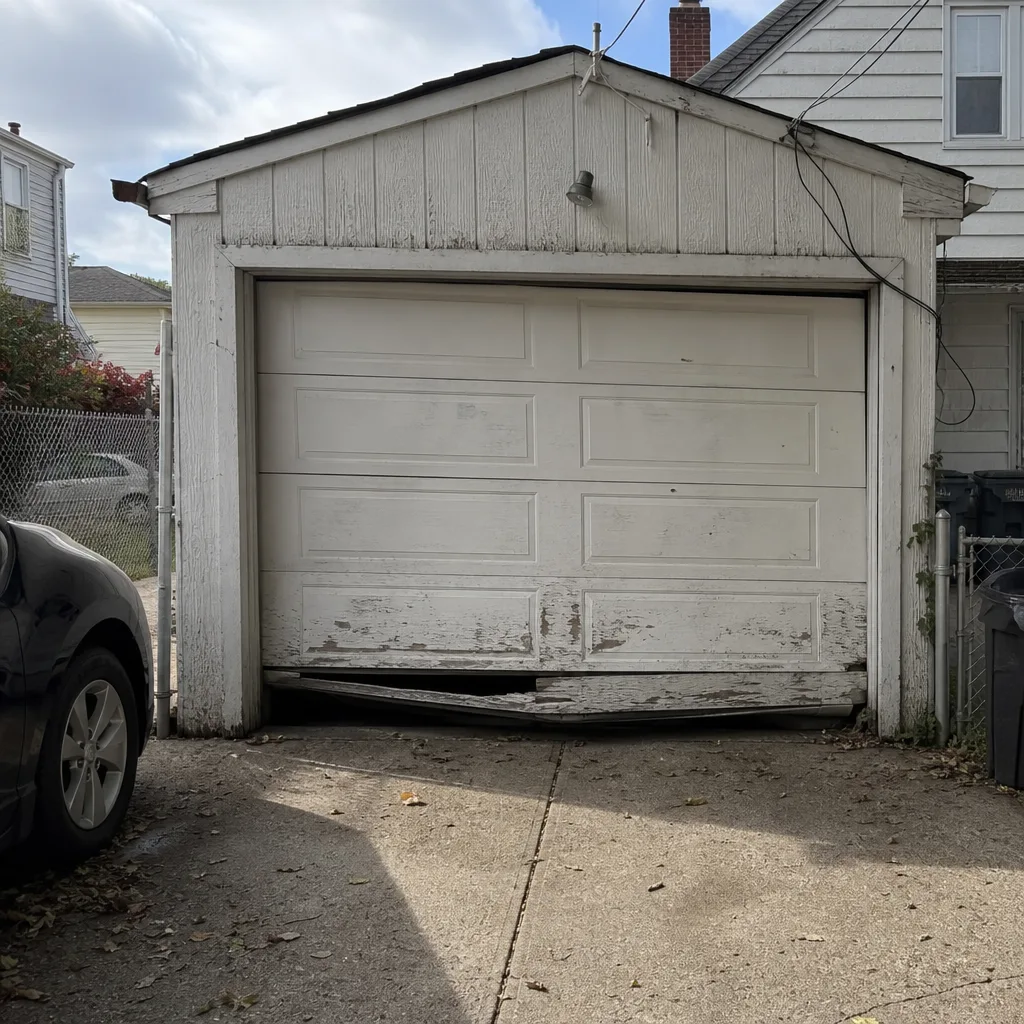 Before
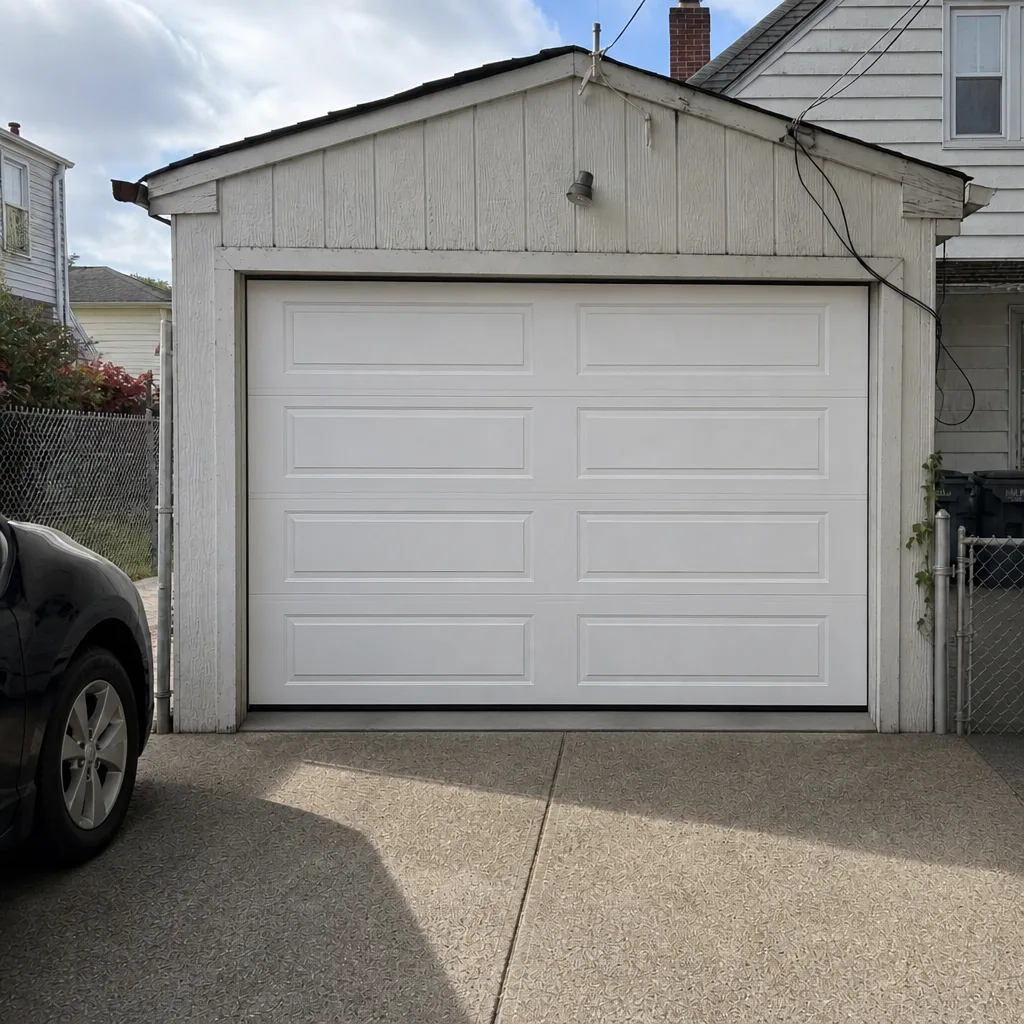 After
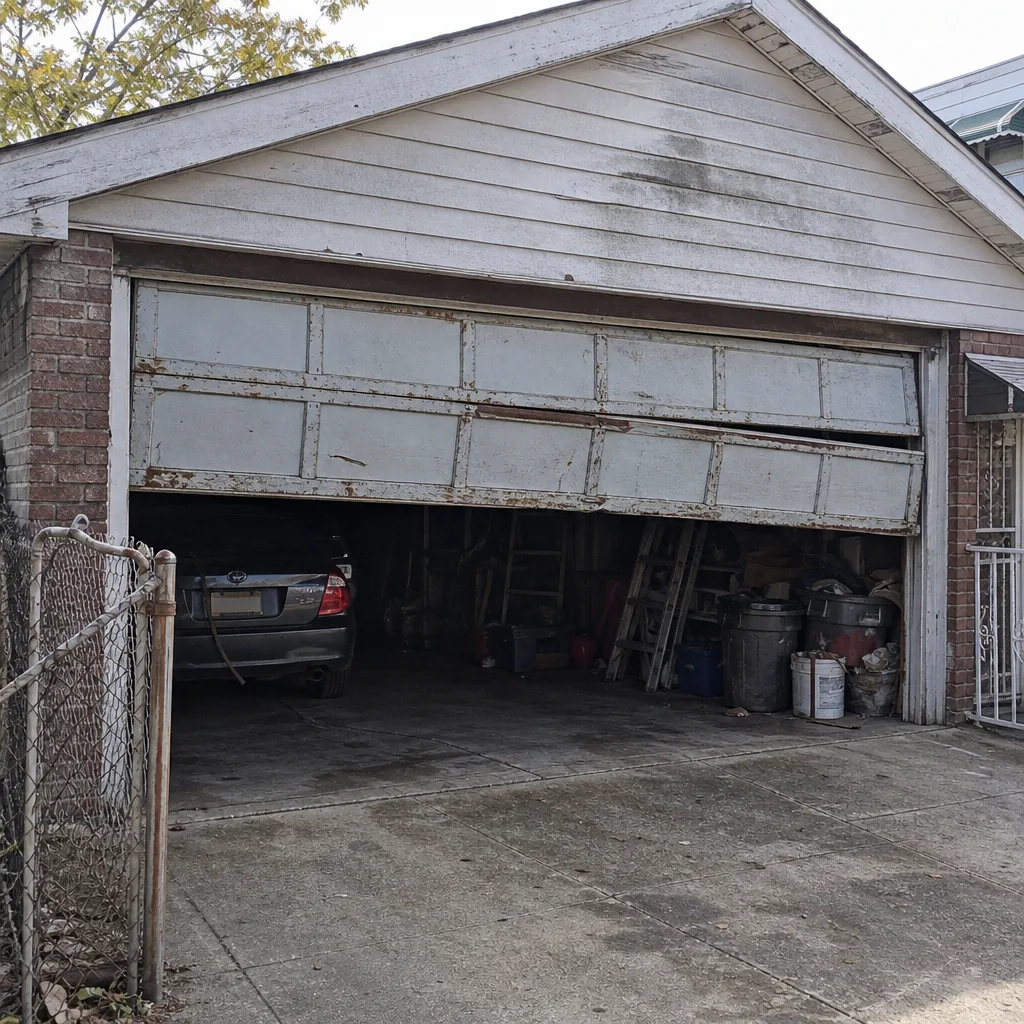 Before
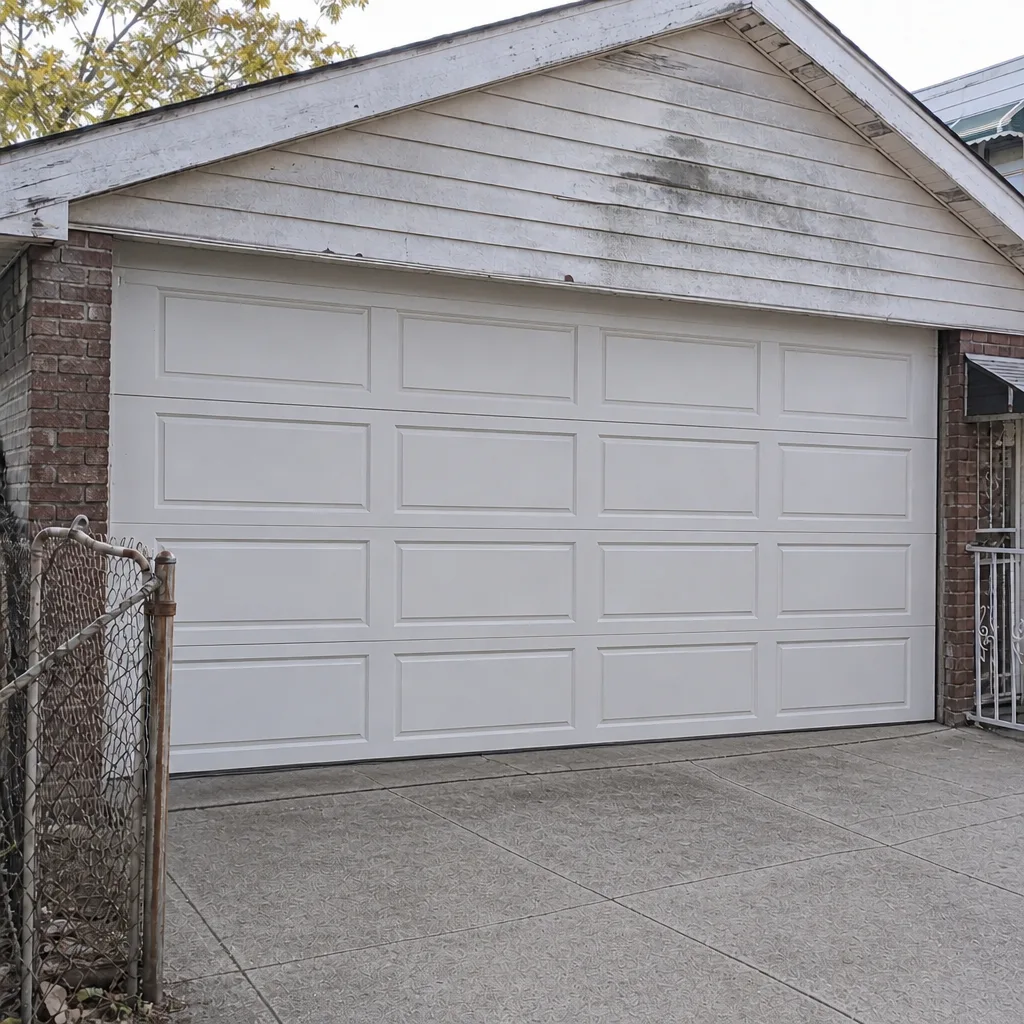 After
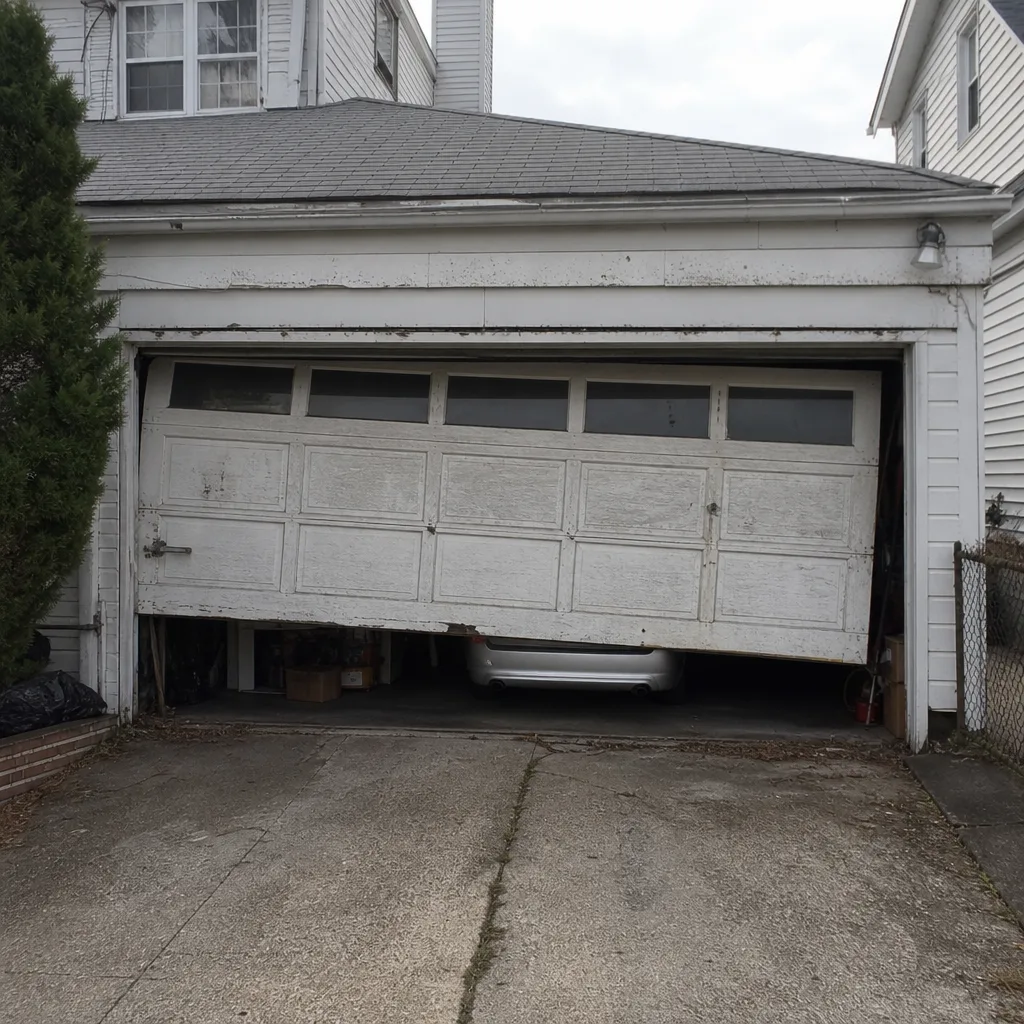 Before
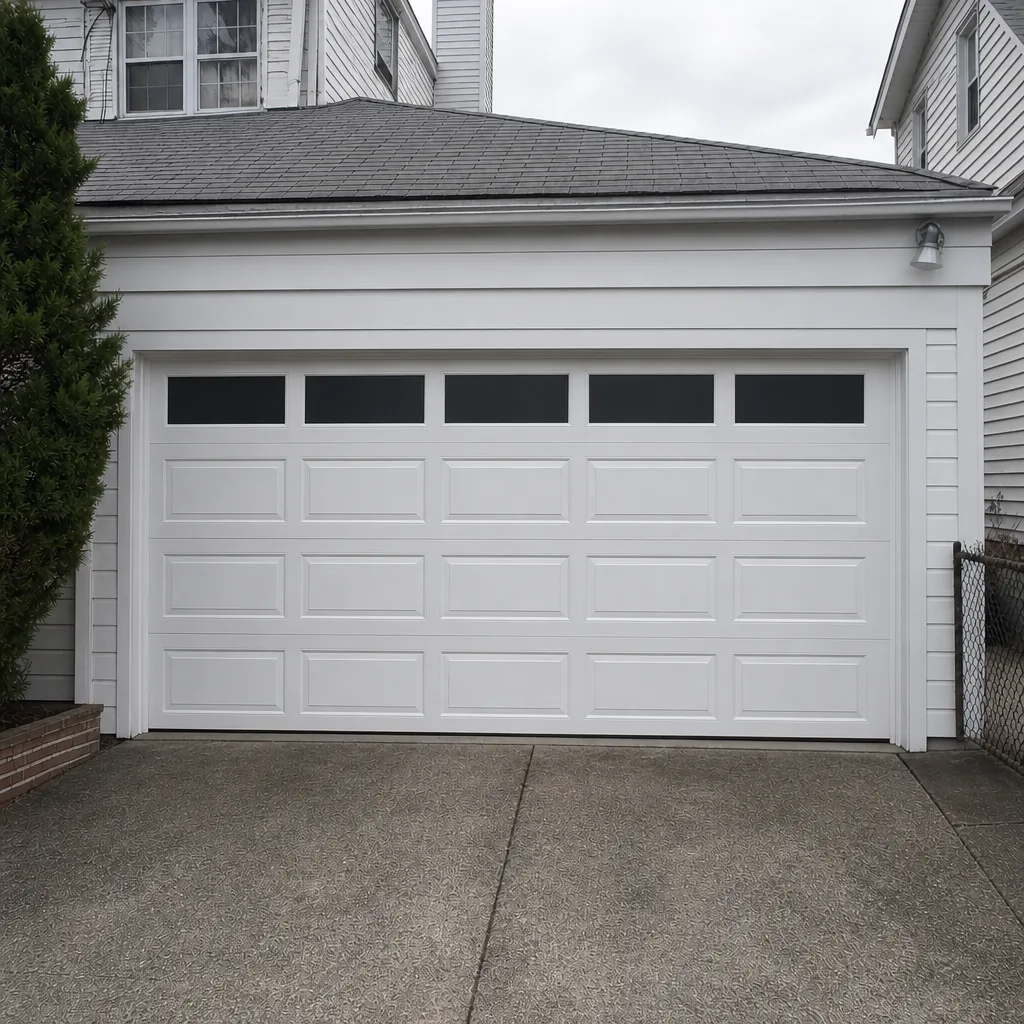 After
When to Call a Professional
Call a professional the moment a door failure moves into one of these territories: a suspected broken spring, a door off its tracks, a door stuck open in a way you can’t secure, or an opener that won’t respond when a vehicle is trapped inside. Those situations carry real injury or security risk and need a specialist rather than a workaround. The same goes for any door that holds position unstably or makes a hard bang when it moves – both point to compromised spring tension. Garage Door Repair East Flatbush offers free estimates in East Flatbush. Call (855) 658-4194 to talk through your situation, and our technicians will tell you whether it’s safe to wait until morning or whether you need a technician today.
Frequently Asked Questions
Stop using the opener immediately, keep everyone away from the door, and do not pull the manual release cord. Call a garage door specialist and describe what you heard and see. If a car is trapped inside, say so on the call – that moves it to an emergency. Call (855) 658-4194 for an exact quote – estimates are free.
You can, but only if the door is balanced and the springs are healthy. Pull the manual release, lift from the bottom section, and confirm the door stays up when you stop it halfway. If it sags or feels heavy, stop and call a technician. Call (855) 658-4194 if you’re not sure.
In most East Flatbush housing, yes. An exposed garage is a security risk within minutes, not hours. Secure the opening from the inside, then call for service. If you can’t secure it, treat it as an emergency. Call (855) 658-4194 for an exact quote – estimates are free.
If the wall button and remote both fail, the problem is likely the opener or its power. If the door moves crookedly, grinds, or jams halfway, the problem is mechanical – tracks, springs, or rollers. A technician can tell you which in a short diagnostic. Call (855) 658-4194 to schedule a free estimate.
No. We quote the price and agree it with you before any work starts. The written estimate is the price. If the technician finds something beyond the original scope, they’ll explain it and quote a new price before doing the additional work. Call (855) 658-4194 for an exact quote – estimates are free.
Same-day emergency service is available for situations where a malfunctioning door blocks access or leaves the garage unsecured. Tell the dispatcher your door’s manufacturer, the opener model, and what happened. Call (855) 658-4194 and we’ll quote the service before we schedule it.
The Bottom Line
Emergency readiness doesn’t mean having a technician’s number saved; it means knowing the first five minutes. Stop the opener, keep everyone back, and leave the manual release alone if the door isn’t balanced. Spring failures and off-track doors are injuries waiting to happen, and spring repair is genuinely a specialist’s job. In a dense block of East Flatbush, a door stuck open needs securing before it needs fixing. Know your door and opener brand now, not when it fails. If it’s already failed, call (855) 658-4194 – the price is agreed before any work starts, and the estimate is free.
Written by the team at Garage Door Repair East Flatbush.